More Dead Dolphins In India
The mass animal deaths continues, and even though many mainstream news sources have no idea what is taking place, from our research the earths magnetic field is being twisted by something in space. Even though critics will blame solar activity from the sun, the earth’s magnetic field seems to be affected by something else.
Today’s latest report comes from India, where apparently dead dolphins have washed up on a beach in Kashid, India:
“Posted in Publishaletter.com
By :(Not Verified) Sneha Tickoo
Letter to the Editor Sent to : Times of India, The Country: India
Date: JAN-14-2013
Subject: Dead dolphins at Kashid beach
Dear Editor:
I was dismayed to see three dead dolphins at Kashid beach this weekend . Dolphins are a rare site in our seas and it was very heartbreaking to see them rotting . None of the authorities had come to pick up their bodies . I am not sure how they were drifted towards the shore as there was a net tied to one of the dolphins tails . My concern is that if any dolphin is swept ashore is there any rescue operation which is conducted to help these animals go back to their habitats . i have clciked a few picks of the bodies . Please contact me if you need these.”
SOURCE: EARTHSHIFTX
Animapocalypse Continues in Peru – Dolphins, Fish, Pelicans Found Dead
Friday, January 18, 2013
Throughout January various animals have been washing up along the shores of Peru’s northern coast.
Photo: Animapocalypse Continues in Peru - Dolphins, Fish, Pelicans Found Dead
According to the Sea Institute of Peru 12 dolphins, 35 sea lions, and 13 pelicans have been found dead along the shores of San Jose, Lambayeque.
It appears that many of the dolphins found had died several weeks prior to their discovery, but the government says it have confirmed all the animals died from natural causes.
The pelicans specifically, appeared to have died from starvation, as the anchovy population has dropped significantly due to the increase in water temperature.
In 2012, the Peruvian government also claimed "natural causes" were responsible for the deaths of about 900 dolphins that had washed up on its shores. In May, Peruvian authorities said warm waters off its coast were to blame for the deaths of more than 5,000 marine birds.
Conservationists not within the government however, have continued to question the government’s reasoning, saying "natural causes" does not explain everything.
Biological Hazard in Pakistan 1.5 million domestic animals dieing
Saturday, 05 January, 2013
Hashim Abro
Much to the horror of the animal bearers, a large number of deaths have been reported within a week in Ghotki and Sukkur [Sindh province]. According to the villagers buffaloes and cows feel congested in breathing and die in a short time span. The sudden death of buffaloes, cows, and goats has forced the breeders to watch their means of livelihood die in front of their eyes. Moreover, some 1.5 million domestic animals are believed to be suffering from this unknown disease.
I [reporter Hashim Abro] appeal to the President of Pakistan to direct the concerned provincial departments to set up campus for the treatment of the domestic animals in the affected districts and also direct the veterinary doctors to make regular visits to the villages throughout the province so as save the domestic animals, which become a sole source of income and livelihood for poverty and sorrow-stricken villagers in the rural areas of Sindh province.
FLU NEWS SCAN: H7N3 in Mexico, H5N1 surveillance
Jan 9, 2013
H7N3 poultry outbreaks return to MexicoOfficials culled almost 300,000 poultry after highly pathogenic H7N3 avian influenza killed 740 birds on one layer farm and the virus was detected on another farm in the area, according to a report today from the World Organization for Animal Health (OIE). Both farms are in Aguascalientes state in central Mexico. The outbreaks are Mexico's first since a series of H7N3 outbreaks led to the culling of millions of poultry last summer in the adjacent state of Jalisco and caused egg prices to soar. In the current outbreaks, "Timely notification from the farmer and surveillance activities allowed immediate depopulation of the two affected production units, reason why both outbreaks identified are closed," the OIE report said. The first outbreak involved 2,990 sick and 740 dead poultry and led to the culling of the remaining 146,755 birds on the farm. The second outbreak was detected during active surveillance by the state and involved the culling of 138,000 additional birds. In sum, 284,015 poultry were culled. Workers have decontaminated both farms.
H5N1 found in 20% of environmental samples from Cambodian bird marketsAbout 20% of environmental samples from Cambodian live-poultry markets were positive for H5N1 avian flu in a recent study, according to a report yesterday in Emerging Infectious Diseases. Cambodian researchers collected samples for 7 weeks in 2011 from poultry cages or stalls housing chickens and ducks at four live-poultry markets. Two of the markets were in Phnom Penh, one in Takeo province, and one in Kampong Cham—all in south-central Cambodia. Of the 502 environmental samples tested, 90 (18%) were H5N1-positive by polymerase chain reaction, and 10 (2%) by virus isolation, with water samples yielding the highest rates of positive findings. The researchers write that environmental sampling of these markets would better detect H5N1 than the current method of using cloacal or throat swabs, which they say rarely detects the virus.
Jan 8 Emerg Infect Dis report
Thousands of dead fish have washed ashore on the south tip of Pawleys Island, S.C *VIDEOS*
Thursday, January 17, 2013
By WMBF News Staff
PAWLEYS ISLAND, SC (WMBF) When you go to the beach you don't expect to find hundreds of dead fish covering the shore.
Courtesy viewer Lisa Mahan
"One time I was here I saw a bunch of jellyfish," Said resident Bill Vogel. "They were all on the shore but nothing like this, it's really weird."
Pawleys Island isn't the first place this week to see the dead Menhaden fish on their shores. DeBordieu Beach had the same issue the day before, according to Chief Michael Fanning of the Pawleys Island Police Department.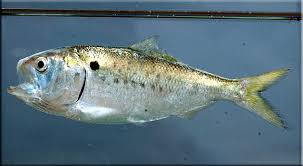
Events like this happen from time to time, last year an influx of Star Fish were found on the same beaches, Fanning said.
Department of Health and Environmental Control (DHEC) and Department of Natural Resources (DNR) visited the area Tuesday and took water samples. Wednesday DNR officials gave an explanation as to what is killing the fish.
"It's an occurrence called hypoxia," Said Sergeant Steve Pop. "That is dissolved oxygen levels in the water that drop to a level that is not sustainable for the fish."
It is a natural event and nothing man-made that is killing the fish, added Pop.
"We've got some deep holes off of north inlet that holds these fish," Said Pop. "This time of year the fish congregate in these holes which is depleting the oxygen source."
Pop said the DNR is hopeful some favorable winds combined with high tides tonight and tomorrow will help wash the fish away from the shore.
BLOG
Over 280 Turtles Show Up Dead in Costa Rica, Nobody Can Figure Out Why
  - 280 turtles show up dead in Costa Rica, nobody can figure out what killed them - 280 turtles show up dead in Costa Rica, nobody can figure out what killed them
Roughly 280 dead turtles showed up dead in the Gulf of Dulce, an inlet in Costa Rica, over the past few days, and for the time being, a reasonable explanation for how and why these animals have passed away is yet to be found.
Therefore, it has been agreed upon that an official investigation into these deaths is to be carried out, especially given the fact that several conservationists have pointed the finger at local fishermen.
More precisely , these greenheads believe that the turtles died as a result of their getting caught in fishing lines. , these greenheads believe that the turtles died as a result of their getting caught in fishing lines.
Times of India quotes the Costa Rican environment ministry, who made a case of how, “The initial aim is to collect information to verify is was caused by human action.”
Interestingly enough, whatever killed these turtles seems to have impacted on other marine creatures as well. Thus, several fish also ended up being washed ashore.
Lots of dead MULLET , Boca Grande Causeway, Florida
Wednesday, January 9, 2013
|

BY MARCY SHORTUSE - There’s quite a stink at the north end of the island, and this time we’re not talking ditches. It’s fish, lots of dead fish, and they have been coagulating around the Boca Grande Causeway.
While many would speculate the fish could be from a red tide bloom, there’s also another possible cause of their death – commercial fishing.
This is the time of year when commercial anglers make their living harvesting mullet. The prize contained within the mullet is roe, red roe, specifically.
When the mullet are brought into the boat, the fishermen squeeze the fish to see what comes out. If it’s a white substance (sperm) that comes forth, the fish is normally rejected. If red roe comes out, that fish is kept. When the fish are sorted, the ones that are rejected are then thrown from the boat. They are usually dead when that happens.
Red roe, by the way, is going for $1.40 a pound. The sperm from the male roe is going for .15 a pound.
It is estimated that last week alone thousands of pounds of mullet were caught in local waters. One hot spot for netting them was Little Gasparilla Pass, and rejected fish from that area have washed into the old marina at the Boca Grande Causeway and County Road 771, and all the way up and down the Boca Grande Causeway.
It may not be just local fishermen who are throwing fish overboard. According to local fishermen, more out-of-town netters have been showing up in our waters as well.
According to the Florida Fish and Wildlife Conservation Commission, “During the 2011–2012 mullet run the FWC received numerous complaints regarding large amounts of roe mullet being discarded into the water dead, and violations involving the improper storage, cooling and transportation of fish by harvesters.”
Study will determine where dead Mississippi turtles originated
Published: January 13, 2013
Read more here: http://www.sunherald.com/2013/01/13/4404070/study-will-determine-where-dead.html#storylink=cpy
By JOHN FITZHUGH — jcfitzhugh@sunherald.com
GULFPORT -- Normally, tires floating in the Mississippi Sound is a bad thing, but for the next few months there is a good reason for them.
The Institute for Marine Mammal Studies, in conjunction with the National Marine Fisheries Service, is releasing some "effigy turtles" in the Gulf of Mexico and Mississippi Sound to see where they drift.
These turtles have a unique look; a lawn mower tire for a body, a Nerf football head, a plastic plate shell and pieces of foam rubber mat for flippers. The tire turtles have GPS tracking devices inside them and contact info on the outside with instructions on what to do if you see one.
Researchers are trying to determine if dead turtles that have showed up on Mississippi shores in recent years actually died in Mississippi waters.
"In the aftermath of the BP Deepwater Horizon oil spill, numerous seemingly healthy sea turtles washed up dead along the shores of the northern Gulf of Mexico," said Andy Coleman, senior research scientist for the Institute for Marine Mammal Studies.
Necropsies showed some of the turtles drowned. Those results implicated the Mississippi fishing industry, though the Mississippi Department of Marine Resources reported commercial fishing activity was down during that time.
"Fishing was down 90 percent and deaths were up hundreds of percents" at the time, said Moby Solangi, IMMS director.
"Everybody said all of (the turtles) were dying in Mississippi, and Mississippi fishermen were getting blamed."
In 2010 and 2011, the number of dead turtles washing up on Mississippi shores was up 50 percent and dead dolphins was up 40 percent, Solangi said.
"The Mississippi Sound is like a cul-de-
sac" in the northern Gulf. Currents in the area are generally believed to lead into the Mississippi Sound, "but you can't speculate it, you have to prove it," Solangi said.
Fisheries Service oceanographer Woody Nero developed a model based on existing data to predict where dead turtles would drift and the turtle effigies are being used to test that model.
Coleman said they are releasing the effigy turtles at various locations in the Mississippi Sound, and as far out as the Chandeleur Sound in Louisiana, to see where they end up.
Currents change with the seasons, so the study, which started in the fall, will continue for about a year to get a full picture. Scientists will pay close attention to the spring data because that is when most strandings occur.
If boaters or fishermen see one of the effigy turtles floating in the water, it is important not to disturb it, Coleman said. If one is found on shore or caught on a fishing line, it has information on how to contact IMMS.
One of the fake turtles released in the fall was picked up by a fisherman, but it was easily tracked and returned.
"I was tracking it (on the computer)," Coleman said, "and all of a sudden it went up to 22 miles per hour. Then it was going 35 to 45 miles per hour and heading to Henderson Point."
IMMS went to the house the turtle was tracked to and it was returned by the surprised fisherman.
Sea turtles found stunned, comatose, from cold water
Sea turtles are being found stranded on Virginia beaches in unusually high numbers after hitting a sudden patch of cold water that leaves them stunned or comatose, according to local experts.
Most of the sea turtles have been found on the Eastern Shore, but one was found last week in Newport News and several others were scattered throughout south Hampton Roads, officials say.
"These animals often appear dead when they are on the beach, but are actually in a coma," Christina Trapani of the Virginia Aquarium Stranding Response Program said in a prepared statement. "If not found and rescued quickly, the turtles will succumb to the cold temperatures."
It's an effect called "cold stunning," and members of the public who find sea turtles on the beach or floating on the surface of the water are asked to report the sightings immediately to the aquarium's stranding response team at 757-385-7575.
Read more here: http://www.sunherald.com/2013/01/13/4404070/study-will-determine-where-dead.html#storylink=cpy
Washed ashore 72 live turtles and found six others dead, NC Coast
By MARTHA WAGGONER Associated Press
RALEIGH, N.C. January 15, 2013 (AP)
Slogging through muck and venturing out on kayaks, volunteers along North Carolina's seashore are rescuing sea turtles that become stunned when the water turns cold and get stuck in coastal sounds, unable to save themselves.
The sea turtles — typically green, Kemp's Ridley and the occasional loggerhead — tend to be juveniles who get so busy gorging themselves on the near-shore goodies that they don't get around to moving out to the warmer Gulf stream before a cold spell hits.
"This is really one of the absolute hot spots on the planet for cold stunning in almost any year," said Liz Browning Fox of Buxton on Hatteras Island, who rescues cold-stunned turtles that beach themselves or get stuck along the edge of the Pamlico Sound. "We have a huge sound system in North Carolina, and it's like a feasting table for several species ... Juvenile sea turtles feast on this delightful table. Like teenagers, they stay at the table as long as you'll let them."
Because they're cold-blooded, turtles' body temperatures match their environment. When the water temperature drops below 50 degrees, they become too lethargic to move into warmer water. Since the first cold-stunned turtle of the winter was found, Dec. 23, 2012, along Cape Lookout, rescuers have taken in 72 live turtles and found six others dead, said Matthew Godfrey, the state sea turtle biologist in Beaufort. The vast majority of the rescued turtles survived, he said.

AP In this Jan 2, 2013 photo provided by Liz...
Some years, as many as 150 cold-stunned turtles have been found in North Carolina, he said.
Most of the turtles this year are being found along Hatteras and Ocracoke islands, said Karen Clark, program coordinator at the Outer Banks Center for Wildlife Education and an adviser to the Network for Endangered Sea Turtles on the Outer Banks.
On Hatteras Island, one volunteer goes out each morning and checks the water temperature. When it's below 50 degrees, a core group of about 10 volunteers is alerted to search for cold-stunned turtles.
Fox dons knee boots while others wear hip waders that allow them to go into deeper water. Fox's brother, Lou Browning, brings turtles in on his kayak, sometimes cradling them on his lap. The volunteers carry these heavy turtles long distances to get them to a car. A 25-pound turtle weighs a lot after a half-mile walk through muck, Fox said.
"When it comes to turtles, we bend over backward to do whatever we can whenever we can," Lou Browning said.
Turtles "are just simply amazing creatures," he said. "They've been around so many millions of years. They're the toughest animals on earth. They survive things that no other creature can."
Brittany Waterfield, 16, of Avon, who participated in a NEST training program rescued a loggerhead with the help of her mother, Tammy, on a cold, dreary Sunday in January. "I felt like I had saved another life," Brittany said. "I would do anything for an animal. "
People who find turtles should call NEST, which has a hotline that operates 24 hours a day, seven days a week. And never assume a sea turtle is dead, Fox says. Passers-by ignored one upside-down turtle, assuming it was dead, but rescuers saved it.
Hundreds of cold-stunned turtles have been found off the New England coast — so many that rehabilitation facilities elsewhere are helping them recover.
Source: BeforeIt'sNews
More than 25,500 fowl die in S. Sulawesi
Andi Hajramurni, The Jakarta Post, Makassar | Archipelago | Wed, January 09 2013
More than 25,500 fowl have died in Sidenreng Rappang (Sidrap) regency in South Sulawesi over the past month. The number is believed to be increasing.
Sidrap Husbandry Agency head Asis Syam said on Tuesday that the actual number could be higher as it was possible that many farmers had not yet filed reports with the agency.
“The dead fowl were positive for bird flu,” he added.
Of the 25,500 dead fowl, most were ducks (21,100). More than 4,000 were chickens.
Sidrap regency is one of the biggest poultry producers in South Sulawesi and has previously experienced a bird flu epidemic. Hundreds of fowl die of bird flu every year in the regency.
According to the agency, the fowl population stood at 7.3 million.
Asis said the agency had called on farmers to immediately burn the carcasses of dead fowl, adding that the agency did not have enough vaccines to inoculate the fowl.
“We still need around 7.3 million vaccines,” he pointed out.
33 spotted deer found dead in Kanha Tiger Reserve
The HinduSpotted deers. File photo: M. Murali
A total of 33 spotted deer were found dead under Ghorela ward in the Kanha Tiger Reserve since last week, forest officials said on Friday.
Kanha Tiger Reserve’s veterinary surgeon Sandeep Agrawal told reporters that 29 spotted deers were found dead between Jan 4-10 and four were found on Friday in the Ghorela ward under the Mukki forest area.
The preliminary cause of their death appears to be malnutrition, infection and severe cold, but the exact reason will be known only after a postmortem and viscera report.
The reserve management has enhanced measures to monitor the health and security of the wild animals. The viscera has been sent to the Jabalpur-based Veterinary College laboratory for testing.
UPDATE: Dead Whale Washes Up on Napeague
Finback whale, about 50 to 60 feet long, washed up on Sunday morning.
Update, 3:20 p.m.: The finback whale that washed up on a Napeague beach on Sunday morning will remain there until Monday morning, when the marine biologists plan to perform a necropsy.
Meanwhile, shortly after the foundation arrived on Napeague, another call, for what turned out to be a baby whale, came in further west down the beach. Click here for that story.
She does not know yet what caused its death, as there are no external signs of blunt force trauma, though the whale's body came to rest on the shore on its left side. Ship strikes are the most commonly cause the deaths of whales that wash up in the area. "Right now, she's kind of suspicious," Durham said. Biologists took tissue samples Sunday afternoon.
Finbacks are documented in the waters off Long Island this time of year, tough how close to the shore depends on the location of its food source. A finback whale washed up on a Breezy Pointbeach late last month. That whale, which was underweight, turned out to have kidney disease and parasites, Durham said.
The finback that came ashore Sunday is of normal weight — between 40 and 50 tons, she said.
Durham thinks it has been dead no more than two weeks. The cold waters, she said, help refrigerate it from decomposing too much. Usually, she said the foundation is alerted by the Coast Guard or ships that a dead whale is floating around, but this time they received no calls before it washed up.
It has some scars on its fluke, or tail, evidence that it became entangled on a net sometimes in its life, Durham said. It also shows signs of scavengers — fish and birds.
Heavy equipment will have to move the whale closer to the dunes so that Durham and her team can perform the necropsy. They will examine its internal organs, dissecting the whale into about four pieces — which will also make it easier to remove from the beach.
Throngs of people went to take in the sight of the dead whale, many bringing their children. Some took pictures in front of it, others touched it skin, and even inside of its mouth.
"We haven't ruled out disease as a cause of death," Durham said, adding there is also decomposition bacteria.
Also, she noted that finback whales are endangered species and it is illegal to harvest any part of it.
Previously: A dead whale washed up on the ocean beach on Napeague, just east of the Windward Shores condominiums, on Sunday morning.
"It's a big one — maybe 50 to 60 feet long," said Ed Michels, the chief harbormaster, who responded after the whale was reported at about 8:30 or 9 a.m., he said.
It appears to have been dead for some time.
While Michels said he believed it was a humpback whale, approximately 30 tons in weight, the Riverhead Foundation said it was an adult, female finback whale.
East Hampton Town Supervisor Bill Wilkinson said Marine Patrol officers are stationed on the beach until the foundation arrives. "We will handle it procedurally and operationally, as we hae done for unfortunate whale deaths in the past," he said.
Highway and sanitation department officials went to the beach to assess the situation on Sunday morning. "We will need outside equipment to properly dispose of the whale, as soon as the remains are released," by the marine mammal experts, Wilkinson said.
Have pictures of the whale? Upload them here.
The South Fork has seen several whales wash up on the coast in recent years.
An adult pygmy sperm whale was discovered dead on the shore in West Hampton Dunes in May of 2012. The 9-foot whale was underweight at about 800 pounds.
Back in July 2011, an injured sperm whale washed up on the rocky shore in Montauk. It died several hours later. At one-year-and-a-half old calf, it weighed 2.5 tons and measured 18 feet long, making the task of removing it extremely difficult. An excavator hoisted the whale off the rocky shore and placing it in a large Dumpster, which was then carted away so that a necropsy could be conducted before it was buried.
Many remember all too well the young humpback whale that became stranded on an East Hampton Village beach in March 2010. Despite attempts to save the animal, it was eventually euthanized.
Baby Pygmy Sperm Whale, Napeague, New York
Monday, January 14, 2013 5:01
ByTaylor K. Vecsey
Email the author
January 13, 2013
The pygmy sperm whale, located about 1 mile away from where a dead finback washed up on Sunday, showed signs of illness; Lack of resources available to save it.
The second whale — a live baby — that washed ashore on Napeague on Sunday afternoon, was euthanized, in large because of the lack of resources to handle stranded, wild whales.
Kim Durham, the rescue program coordinator at the Riverhead Foundation for Marine Research and Preservation, said the male pygmy sperm whale was still breathing when discovered in the surf, about one mile down from where a dead finback whale washed ashore earlier on Sunday.
Marine biologists decided to euthanize the young whale for several reasons.
"It showed signs of illness," Durham said, adding that the Riverhead Foundation had no tank available to rehabilitate it. "It was a very sad afternoon," she said.
The whale, which was about 5 feet long and 150 pounds and believed to be a yearling, showed poor body condition. Durham said its body was "sunken in behind the neck," a place biologists assess whales. It also had skin legions, which can indicate infection, she said.
Pygmy sperm whales, young or old, are off-shore species and found in warmer waters. "They are not
Are all these Mass Animal Deaths a sign of the End Times?
16th January 2013 - 2,200 Chickens killed due to Avian Flu in Pokhara in Nepal.
15th January 2013 - 30+ Birds found dead in Duson, Louisiana, America.
15th January 2013 - Thousands of dead Fish washed up on Pawleys Island, in South Carolina, America.
11th January 2013 - Thousands of dead Birds are washing up on Michigan's shoreline in America.
11th January 2013 - Hundreds of thousands of dead Fish washed up on Masonboro Island in America.
10th January 2013 - 180,000 Cattle dead due to cold weather in Northern China.
10th January 2013 - Tonnes of Fish have died off Hanura Beach in Indonesia.
10th January 2013 - Dozens of Pigs die of rare disease raising concern in Barahona, Dominican Republic.
9th January 2013 - 770 Geese, plus large numbers of Ducks and Fish killed by sewage in Hefei, China.
9th January 2013 - 25,500+ Ducks and Chickens dead in South Sulawesi, Indonesia.
9th January 2013 - Thousands of Sheep and Cattle killed by wild fires in Australia.
9th January 2013 - 284,000+ Birds killed due to Avian Influenza in Mexico.
7th January 2013 - 50 baby sharks found dead along Nukulau beachfront in Fiji.
6th January 2013 - Thousands of Livestock killed by disease in Marakwet, Kenya.
4th January 2013 - Several thousand dead Fish found along the shores of Altus-Lugert Lake, Oklahoma, America.
4th January 2013 - Massive Fish kill along 10km of Coromandel beaches in New Zealand.
4th January 2013 - Hundreds of Ducks die suddenly in Bali, Indonesia.
4th January 2013 - 30 Turtles wash ashore dead in Chennai, India.
4th January 2013 - Mass Fish kill in the Boca Grande Causeway, Florida, America.
4th January 2013 - Thousands of dead Sardines washing ashore on Sanibel Island, Florida, America.
3rd January 2013 - Hundreds of buffaloes, cows and goats die from mysterious disease, with 1.5 MILLION infected in Pakistan.
3rd January 2013 - Mass Fish kills happening 2 or 3 times every year on Phra Prong River in Thailand.
2nd January 2013 - Thousands of Fish "Freeze to death" in Yunlin County, China.
2nd January 2013 - Fish kill on the Condamine River in Australia.
1st January 2013 - 150,000 lbs of Fish found dead in Bazhou District, China.
I WILL UPDATE YOU AS WE CRUISE THROUGH JANUARY. THERE ARE SO MANY MASS ANIMAL DEATH EVENTS THAT MY POSTS WILL BE EXTRAORDINARILY LONG IF I INCLUDE ALL STORIES AND POSSIBLE EXPLANATION. HERE IS THE BEST EXPLANATION...ALL OF THESE ANIMALS RELY ON THE MAGNETIC FIELD, WHICH SEEMS TO BE CHANGING WITH THE DESTABILIZATION OF THE EARTH'S CORE AND THE HOLES IN THE IONOSPHERE, ADDING NEW MAGNETIC "POLES" OR CONFUSING WHERE THE MOVING MAGNETIC POLE IS, WHICH IS ANOTHER FACTOR. BECAUSE OF THE MOVEMENT OF THE CONTINENTS BECAUSE OF INCREASE IN LARGER AND MORE FREQUENT EARTHQUAKES AND VOLCANIC ACTIVITY, THERE IS ADDED CONFUSION BASED ON WHERE THE CONTINENTS ARE, AS WELL AS WHERE THE ACTUAL MAGNETIC POLE IS, WHICH HAS MOVED DRAMATICALLY WITH THE CHANGE IN THE AXIS OF THE EARTH AND THE CONTINENTAL MOVEMENT, WHICH ARE BOTH CONNECTED.


