Ad

Showing posts with label cold war. Show all posts

Monday, June 3, 2013

Astounding Numbers of Nuclear Arms Revealed for Over 8 Countries. Nuclear Arms Race Still On.

Nuclear arms race 'alarming' 

Three of the world's nuclear powers - China, India and Pakistan - have increased their arsenals over the past year, while the other five have cut their strength or kept them stable, the Stockholm International Peace Research Institute says.
China now has 250 nuclear warheads against 240 in 2012, while Pakistan has increased its warheads by about 10 to between 100 and 120 and India has also added roughly 10 for a total of 90 to 110, the institute said in its annual report on Monday.
According to the Stockholm group, the arms race is all the more disturbing because of what it called a ''fragile'' peace in Asia, characterised by growing tensions since 2008 between India and Pakistan, China and Japan, and the two Koreas, among others.
''While states have avoided direct conflict with each other and have stopped supporting insurgent movements on each other's territory, decades-old suspicions linger and economic integration has not been followed up with political integration,'' the institute said.
Only the two old superpowers have cut their warheads, Russia reducing its number from 10,000 to 8500, and the US scaling back from 8000 to 7700. The warheads controlled by France stayed at 300, while Britain's remained at 225 and Israel's at 80.
The institute acknowledged the figures were largely estimates.
While the global total of warheads was down, it said this did not translate into a significantly diminished nuclear threat.
Agence France-Presse
India’s Agni-V missile
(Photo: Indian Ministry of Defense/AP/dapd)

WEAPONS

Asian countries pile up nuclear arms

The arms race in Asia has increased since 2008 mainly due to growing tensions between China and Japan, the two Koreas, and India and Pakistan, says the Stockholm International Peace Research Institute in its report.
The Stockholm International Peace Research Institute (SIPRI) says in its latest report that China, India and Pakistan have added more nuclear weapons to their stock in the last few years.
The annual report claims that while China appears to be expanding its nuclear arsenal, India and Pakistan are increasing both their nuclear as well as their conventional weapons.
Pakistan is also enhancing its plutonium production at the central Khushab city, which is home to the Heavy Water and Natural Uranium Research Reactor - an important component of the Islamic state's special weapons program.
Chinese Premier Li Keqiang (R) and Indian Prime Minister Manmohan Singh wave towards the media during Li's ceremonial reception at the forecourt of India's presidential palace Rashtrapati Bhavan in New Delhi May 20, 2013
(Photo: REUTERS/Adnan Abidi)China and India are locked in border disputes
SIPRI further says that in 2012 China, India and Pakistan added 10 warheads each to their nuclear storage. China, it says, now has 250 nuclear warheads, whereas Pakistan possesses 100 to 120, and India 90 to 110.
The three Asian countries are home to over 2.7 billion people, which is nearly 40 percent of the global population.
'An inaccurate report'
Kapil Kak, a retired Indian air force officer, who is currently associated with the Center of Air Power Studies in New Delhi, says his country does not need to increase its nuclear arsenal nor it plans to do so.
"We keep minimum deterrence as part of our nuclear strategy. But yes, we have a hostile neighborhood, so we have enhanced the quality of the arsenal and also improved command, control protocols and accuracy of the warheads," Kak told DW, adding that he failed to understand why Pakistan needed so many nuclear weapons.
Ravi Sawhney, a former deputy chief of the Indian army is of the view that China's global ambitions and its attempts to increase its hegemony in Asia may have prompted India to enhance its nuclear capabilities.
Pakistan-made missile Ghauri, which has range of 1,500 kilometers (900 milies) capable of carrying nuclear war head, is on display during the Pakistan National Day parade in Islamabad, Pakistan on Wednesday, March 23, 2005 in Islamabad, Pakistan
(Photo: ddp images/AP Photo/B.K.Bangash)Pakistan's nuclear weapons are a cause of concern
"Pakistan's insecurity stems from the fact that India is far superior in conventional warfare. We have our compulsions too, and our nuclear weapons program is moving forward steadily," Sawhney told DW.
But some experts, like G. Balachandran - a consulting fellow at the Institute for Defence Studies and Analyses - doubt the accuracy of the SIPRI report.
"This report will not have any impact on the stability or instability in the Asian region. There is absolutely nothing to get excited about. And how can SIPRI get details of India's nuclear warheads when only few people have any knowledge about it?” asked Balachandran.

By MALIN RISING Associated Press

China, India and Pakistan have increased their nuclear weapons by about 10 warheads each in the past year, and other nuclear states appear set on maintaining their arsenals, a Swedish think tank said Monday.
At the start of the year, China had raised its number of nuclear warheads to 250 from 240 in 2012 as part of a process to modernize its defense, the Stockholm International Peace Research Institute said. However it also said China is "highly non-transparent" when it comes to its nuclear arsenal.
SIPRI researcher Pillip Schell said China may continue "the very slight process of increasing" its nuclear arms in the long-term but that there is no sign the country will change its current policy of maintaining a credible deterrent with the smallest possible nuclear arsenal.
"It is not so much about an increase in numbers, but an increase in quality," he said.
Bitter rivals Pakistan and India also increased their arsenals by around 10 warheads each.
Meanwhile, the U.S. and Russia continued their disarmament in accordance with the new START treaty that they signed in 2010. The U.S. reduced its number of warheads to 7,700 from 8,000, and Russia cut its arsenal to 8,500 from 10,000.
However, at the same time the U.S., Russia, France, China and Britain have all either deployed new nuclear weapon delivery systems or announced programs to do so, SIPRI said.
"There is little to inspire hope that the nuclear weapon-possessing states are genuinely willing to give up their nuclear arsenals," SIPRI researcher Shannon Kile said in a statement. "The long-term modernization programs under way in these states suggest that nuclear weapons are still a marker of international status and power."
Here is SIPRI's list of the number of nuclear warheads in the world at the start of 2013 compared with the start of 2012.

Tuesday, August 28, 2012

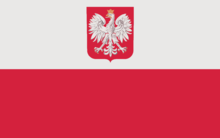
Poland's Strategy


August 28, 2012

By George Friedman
Polish national strategy pivots around a single, existential issue: how to preserve its national identity and independence. Located on the oft-invaded North European Plain, Poland's existence is heavily susceptible to the moves of major Eurasian powers. Therefore, Polish history has been erratic, with Poland moving from independence -- even regional dominance -- to simply disappearing from the map, surviving only in language and memory before emerging once again.
North European Plain
For some countries, geopolitics is a marginal issue. Win or lose, life goes on. But for Poland, geopolitics is an existential issue; losing begets national catastrophe. Therefore, Poland's national strategy inevitably is designed with an underlying sense of fear and desperation. Nothing in Polish history would indicate that disaster is impossible.
To begin thinking about Poland's strategy, we must consider that in the 17th century, Poland, aligned with Lithuania, was one of the major European powers. It stretched from the Baltic Sea almost to the Black Sea, from western Ukraine into the Germanic regions. By 1795, it had ceased to exist as an independent country, divided among three emerging powers: Prussia, Russia and Austria.

Poland-Lithuania Commonwealth
It did not regain independence until after World War I -- it was created by the Treaty of Versailles (1919) -- after which it had to fight the Soviets for its existence. Poland again was brought under the power of a foreign nation when Germany invaded in 1939. Its statehood was formalized in 1945, but it was dominated by the Soviets until 1989.
Informed by its history, Poland understands that it must retain its independence and avoid foreign occupation -- an issue that transcends all others psychologically and practically. Economic, institutional and cultural issues are important, but the analysis of its position must always return to this root issue.

Poland's Elusive Security

Poland has two strategic problems. The first problem is its geography. The Carpathian Mountains and the Tatra Mountains provide some security to Poland's south. But the lands to the east, west and southwest are flat plains with only rivers that provide limited protection. This plain was the natural line of attack of great powers, including Napoleonic France and Nazi Germany.
Poland's Strategy
During the 17th century, the Germans were fragmented in the Holy Roman Empire, while Russia was still emerging as a coherent power. The North European Plain was an opportunity for Poland. Poland could establish itself on the plain. It could protect itself against a challenge from any direction. But Poland becomes extremely difficult to defend when multiple powers converge from different directions. If Poland is facing three adversaries, as it did in the late 18th century with Prussia, Russia and Austria, it is in an impossible position.
For Poland, the existence of a powerful Germany and Russia poses an existential problem, the ideal solution to which is to become a buffer that Berlin and Moscow respect. A secondary solution is an alliance with one for protection. The latter solution is extremely difficult because dependence on Russia or Germany invites the possibility of absorption or occupation. Poland's third solution is to find an outside power to guarantee its interests.
This is what Poland did in the 1930s with Britain and France. This strategy's shortcomings are obvious. First, it may not be in the interests of the security guarantor to come to Poland's assistance. Second, it may not be possible at the time of danger for them to help Poland. The value of a third-party guarantee is only in deterring attack and, failing that, in the willingness and ability to honor the commitment.
Since 1991, Poland has sought a unique solution that was not available previously: membership in multilateral organizations such as the European Union and NATO. Such memberships are meant to provide protection outside the bilateral system. Most important, these memberships bring Germany and Poland into the same political entity. Ostensibly, they guarantee Polish security and remove the potential threat of Germany.
This solution was quite effective while Russia was weak and inwardly focused. But Polish history teaches that Russian dynamics change periodically and that Poland cannot assume Russia will remain weak or benign in perpetuity. Like all nations, Poland must base its strategy on the worst-case scenario.
The solution also is problematic in that it assumes NATO and the European Union are reliable institutions. Should Russia become aggressive, NATO's ability to field a force to resist Russia would depend less on the Europeans than on the Americans. The heart of the Cold War was a struggle of influence across the North European Plain, and it involved 40 years of risk and expense. Whether the Americans are prepared to do this again is not something Poland can count on, at least in the context of NATO.
Moreover, the European Union is not a military organization; it is an economic free trade zone. As such, it has some real value to Poland in the area of economic development. That isn't trivial. But the extent to which it contains Germany is now questionable. The European Union is extremely stressed, and its future is unclear. There are scenarios under which Germany, not wanting to shoulder the cost of maintaining the European Union, may loosen its ties with the bloc and move closer to the Russians. The emergence of a Germany not intimately tied to a multinational European entity but with increasing economic ties with Russia is Poland's worst-case scenario.
Obviously, close ties with NATO and the European Union are Poland's first strategic solution, but the viability of NATO as a military force is less than clear and the future of the European Union is clouded. This is at the heart of Poland's strategic problem. When it was independent in the 20th century, Poland sought multilateral alliances to protect itself from Russia and Germany. Among these alliances was the Intermarium, an interwar concept promoted by Polish Gen. Jozef Pilsudski that called for an alignment comprising Central European countries from the Baltic Sea to the Black Sea that together could resist Germany and Russia. The Intermarium concept never took hold, and none of these multilateral alliances has proved sufficient to address Polish concerns.

A Matter of Time

Poland has three strategies available to it. The first is to do everything it can to keep NATO and the European Union viable and Germany contained within them. Poland doesn't have the power to ensure this. The second is to create a relationship with Germany or Russia that guarantees its interests. Obviously, the ability to maintain those relationships is limited. The third strategy is to find an outside power prepared to guarantee its interests.
That power is currently the United States. But the United States, after the experiences in the Islamic world, is moving toward a more distant, balance-of-power approach to the world. This does not mean the United States is indifferent to what happens in northern Europe. The growth of Russian power and potential Russian expansionism that would upset the European balance of power obviously would not be in Washington's interest. But as the United States matures as a global power, it will allow the regional balance of power to stabilize naturally rather than intervene if the threat appears manageable.
In the 1930s, Poland's strategy was to find a guarantor as a first resort. It assumed correctly that its own military capability was insufficient to protect itself from the Germans or the Soviets, and certainly insufficient to protect itself from both. Therefore, it assumed that it would succumb to these powers without a security guarantor. Under these circumstances, no matter how much it increased its military power, Poland could not survive by itself.
The Polish analysis of the situation was not incorrect, but it missed an essential component of intervention: time. Whether an intervention on Poland's behalf consisted of an attack in the west or a direct intervention in Poland, the act of mounting such an intervention would take more time than the Polish army was able to buy in 1939.
This points to two aspects of any Polish relationship to the United States. On one hand, the collapse of Poland as Russia resurges would deprive the United States of a critical bulwark against Moscow on the North European Plain. On the other hand, intervention is inconceivable without time. The Polish military's ability to deter or delay a Russian attack sufficiently to give the United States -- and whatever European allies might have the resources and intent to join the coalition -- time to evaluate the situation, plan a response and then respond must be the key element of Polish strategy.
Poland may not be able to defend itself in perpetuity. It needs guarantors whose interests align with its own. But even if it has such guarantors, the historical experience of Poland is that it must, on its own, conduct a delaying operation of at least several months to buy time for intervention. A joint Russo-German attack, of course, simply cannot be survived, and such multifront attacks are not exceptional in Polish history. That cannot be dealt with. A single-front attack could be, but it will fall on Poland to mount it.
This is a question of economics and national will. The economic situation in Poland has improved dramatically over recent years, but building an effective force takes time and money. The Poles have time, since the Russian threat at this point is more theoretical than real, and their economy is sufficiently robust to support a significant capability.
The primary issue is national will. In the 18th century, the fall of Polish power had as much to do with internal disunity among the Polish nobility as it had to do with a multifront threat. In the interwar period, there was will to resist, but it did not always include the will to absorb the costs of defense, preferring to believe that the situation was not as dire as it was becoming. Today, the will to believe in the European Union and in NATO, rather than to recognize that nations ultimately must guarantee their own national security, is an issue for Poland to settle.
Read the rest: Poland's Strategy | Stratfor 

Thursday, December 8, 2011

Attention! Multi-Action War Against Iran.

The Covert Intelligence War Against Iran
By Scott Stewart | December 8, 2011

By Scott Stewart
There has been a lot of talk in the press lately about a “cold war” being waged by the United States, Israel and other U.S. allies against Iran. Such a struggle is certainly taking place, but in order to place recent developments in perspective, it is important to recognize that the covert intelligence war against Iran (and the Iranian response to this war) is clearly not a new phenomenon.

Indeed, STRATFOR has been chronicling this struggle since early 2007. Our coverage has included analyses of events such as the defection to the West of Iranian officials with knowledge of Tehran’s nuclear program; the Iranian seizure of British servicemen in the Shatt al Arab Waterway; the assassination of Iranian nuclear scientists; the use of the Stuxnet worm to cripple Iranian uranium enrichment efforts; and Iranian efforts to arm its proxies and use them as a threat to counteract Western pressure. These proxies are most visible in Iraq and Lebanon, but they also exist in Yemen, Afghanistan, Syria, the Palestinian territories, Saudi Arabia and other Gulf states.

While the covert intelligence war has been under way for many years, the tempo of events that can readily be identified as part of it has been increasing over the past few months. It is important to note that many of these events are the result of hidden processes begun months or even years previously, so while visible events may indeed be increasing, the efforts responsible for many of them began to increase much earlier. What the activities of recent months do tell us is that the covert war between Iran and its enemies will not be diminishing anytime soon. If anything, with the current withdrawal of U.S. troops from Iraq and Iranian nuclear efforts continuing, we likely will see the results of additional covert operations — and evidence of the clandestine activity required to support those operations.

Ramping Up

All eyes were on this covert intelligence war after The New York Times published an article Jan. 15 reporting that the United States and Israel worked together to create and launch Stuxnet against the Iranian nuclear program. The visible events related to the intelligence war maintained a relatively steady pace until Oct. 11, when the U.S. Department of Justice announced that two men had been charged in New York with taking part in a plot by the Iranian Quds Force to kill Saudi Arabia’s ambassador to the United States, Adel al-Jubeir, on U.S. soil.

In early November, a new International Atomic Energy Agency (IAEA) report was issued detailing Iranian efforts toward a nuclear weapons program. While this report did not contain any major revelations, it did contain new specifics and was more explicit than previous IAEA reports in its conclusion that Iran was actively pursuing a nuclear weapons program. The IAEA report resulted in an Israeli-led diplomatic and public relations campaign urging more effective action against Iran, ranging from more stringent sanctions to military operations.

Then, in the early afternoon of Nov. 12, explosions occurred at an Islamic Revolutionary Guard Corps (IRGC) ballistic missile base near Tehran, killing 17 people, including a high-ranking IRGC commander who was a critical figure in Iran’s ballistic missile program. Iran has insisted the blast was accidental, but speculation has since spread that the explosion could have been part of a sabotage operation carried out by Israeli intelligence. Israeli intelligence officials also have undertaken not-so-subtle efforts to ensure that outside observers believe they were responsible for the blasts.

Later on Nov. 12, the Bahraini government went public with the discovery of an alleged plot involving at least five Bahrainis traveling through Syria and Qatar to carry out attacks against government and diplomatic targets in Bahrain. Iran vehemently denied it was involved and portrayed the plot as a fabrication, just as it responded to the alleged plot against the Saudi ambassador.

The next day, the Iranian press reported that Ahmad Rezai, the son of Mohsen Rezai — who is the secretary of Iran’s Expediency Council, a former IRGC commander and a presidential contender — was found dead at a hotel in Dubai. The deputy head of the Expediency Council told the Iranian press that the son’s death was suspicious and caused by electric shocks, while other reports portrayed the death as a suicide.

On Nov. 20, the Los Angeles Times reported that U.S. intelligence officials confirmed the CIA had suspended its operations in Lebanon following the arrest of several of its sources due to sloppy tradecraft on the part of CIA case officers assigned to Beirut. Following this report, the Iranian government announced that it had arrested 12 CIA sources due to tradecraft mistakes. We have been unable to determine if the reports regarding Lebanon are true, merely CIA disinformation or a little of both. Certainly, the CIA would like the Iranians to believe it is no longer active in Lebanon. Even if these reports are CIA spin, they are quite interesting in light of the Oct. 11 announcement of the thwarted assassination plot in the United States and the Nov. 12 announcement of the arrests in Bahrain.

On Nov. 21, the United States and the United Kingdom launched a new wave of sanctions against Iran based on the aforementioned IAEA report. The new sanctions were designed to impact Iran’s banking and energy sector. In fact, the United Kingdom took the unprecedented step of totally cutting off Iran’s Central Bank from the British financial sector. The Canadian government undertook similar action against the Central Bank of Iran.

On Nov. 28, there were unconfirmed press reports of an explosion in Esfahan, one of Iran’s largest cities. These reports were later echoed by a STRATFOR source in Israel, and U.S. sources have advised that explosions did occur in Esfahan and that they caused a significant amount of damage. Esfahan is home to numerous military and research and development facilities, including some relevant to Iran’s nuclear efforts. We are unsure which facilities at Esfahan were damaged by the blasts and are trying to identify them.
Elsewhere on Nov. 28, Iran’s Guardians Council, a clerical organization that provides oversight of legislation passed by Iran’s parliament, approved a bill to expel the British ambassador and downgrade diplomatic relations between the two countries. The next day, Iranian protesters stormed the British Embassy in Tehran, along with the British Embassy’s residential compound in the city. The angry — and well-orchestrated — mob was protesting the sanctions announced Nov. 21. Iranian authorities did not stop the mob from storming either facility.

On Dec. 1, the European Union approved new sanctions against some 180 Iranian individuals and companies over Iran’s support of terrorism and its continued nuclear weapons program. The European Union did not approve a French proposal to impose a full embargo on Iranian oil.

In the early hours of Dec. 4, a small improvised explosive device detonated under a van parked near the British Embassy building in Manama, Bahrain. The device, which was not very powerful, caused little structural damage to the vehicle and none to the building itself.

The next day, an unnamed U.S. official confirmed Dec. 4 reports from several Iranian news outlets that Iran had recovered an RQ-170 “Sentinel” unmanned aerial vehicle (UAV) in Iranian territory. The Iranian reports claimed that Iranian forces were responsible for bringing down the Sentinel — some even said the Iranians were able to hack into the UAV’s command link. U.S. officials have denied such reports, and it is highly unlikely that Iran was able to take control of a UAV and recover it intact.

Outlook

The United States is currently in the process of completing the withdrawal of its combat forces from Iraq. With the destruction of the Iraqi military in 2003, the U.S. military became the only force able to counter Iranian conventional military strength in the Persian Gulf region. Because of this, the U.S. withdrawal from Iraq will create a power vacuum that the Iranians are eager to exploit. The potential for Iran to control a sphere of influence from western Afghanistan to the Mediterranean is a prospect that not only frightens regional players such as Israel, Saudi Arabia and Turkey but also raises serious concerns in the United States.

As we have noted before, we don’t believe that a military attack against Iran’s nuclear facilities alone is the answer to the regional threat posed by Iran. Iran’s power comes from its ability to employ its conventional forces and not nuclear weapons. Therefore, strikes against its nuclear weapons program would not impact Iran’s conventional forces or its ability to interfere with the flow of oil through the Strait of Hormuz by using its conventional forces asymmetrically against U.S. naval power and commercial shipping. Indeed, any attack on Iran would have to be far broader than just a one-off attack like the June 1981 Israeli strike at Osirak, Iraq, that crippled Saddam Hussein’s nuclear weapons program.

Because of this difficulty, we have seen the Israelis, Americans and their allies attacking Iran through other means. First of all, they are seeking to curb Iran’s sphere of influence by working to overthrow the Syrian regime, limit Syria’s influence in Iraq and control Hezbollah in Lebanon. They are also seeking to attack Iran’s nuclear program by coercing officials to defect, assassinating scientists and deploying cyberwarfare weapons such as the Stuxnet worm.

It is also necessary to recognize that covert action does not occur in a vacuum. Each covert activity requires a tremendous amount of clandestine intelligence-gathering in order to plan and execute it. With so much covert action happening, the clandestine activity undertaken by all sides to support it is obviously tremendous. But as the frequency of this activity increases, so can sloppy tradecraft.

Finally, as we examine this campaign it is remarkable to note that not only are Iran’s enemies using covert methods to stage attacks on Iran’s nuclear program and military capabilities, they are also developing new and previously unknown methods to do so

Read more: The Covert Intelligence War Against Iran | STRATFOR
"The Covert Intelligence War Against Iran is republished with permission of STRATFOR."