Ad

Showing posts with label breach in Earth's magnetic field. Show all posts

Wednesday, September 7, 2011

March 10 X-Class Solar Flare. March 11 Huge Earthquake Activity. This Flare Is More Direct & Larger.

Does the solar flare activity cause earthquakes on Earth? There has been a bit of a rumble about that among scholars and amateurs alike. In previous patterns regarding the occurrence of X-Class Flares and earthquakes, there seems to be a very likely correspondence that between X-Class flares and large earthquakes. Since we have just encountered an X-Class Flare that was faced directly at Earth, I put out the warning right now that there will likely be a large increase in earthquake activity, even an extraordinarily large quake.


Coincidences happen, but follow what is going on as a scientific observation of patterns. When the X-Class Flare occurred on March 10, 2011, the next day, Japan experienced their enormous and destructive earthquake(s) and tsunami.

Watch what happens in the next few days and be working on your preparedness, i.e., 72 Hour Kits, Food and Water storage, family earthquake drills, etc. Let's see what happens in the next few days.

Tuesday, March 22, 2011

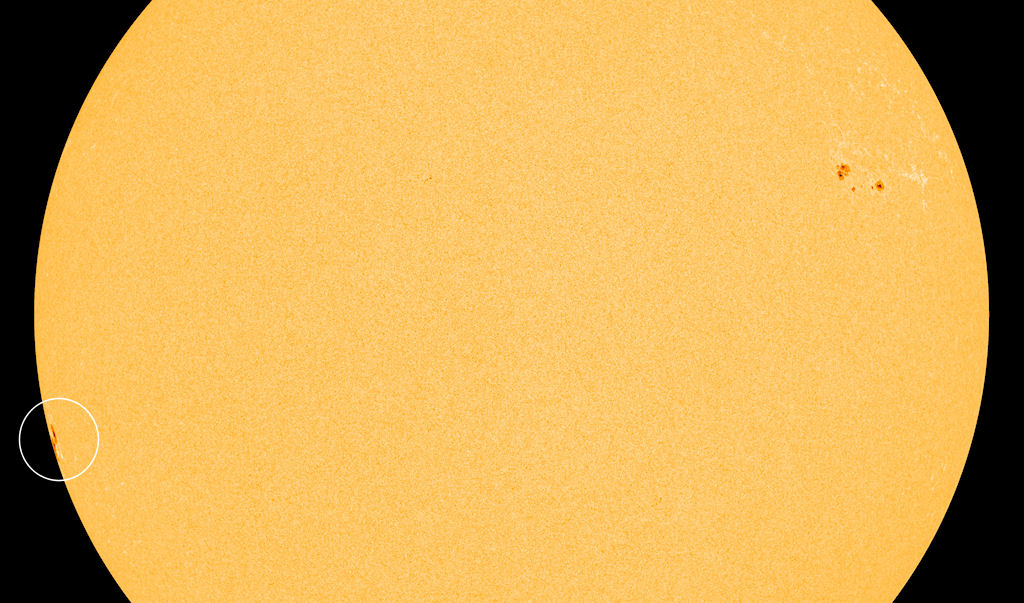
Get Ready For More And Massive Solar Activity. Sunspot 1165 Has Grown.

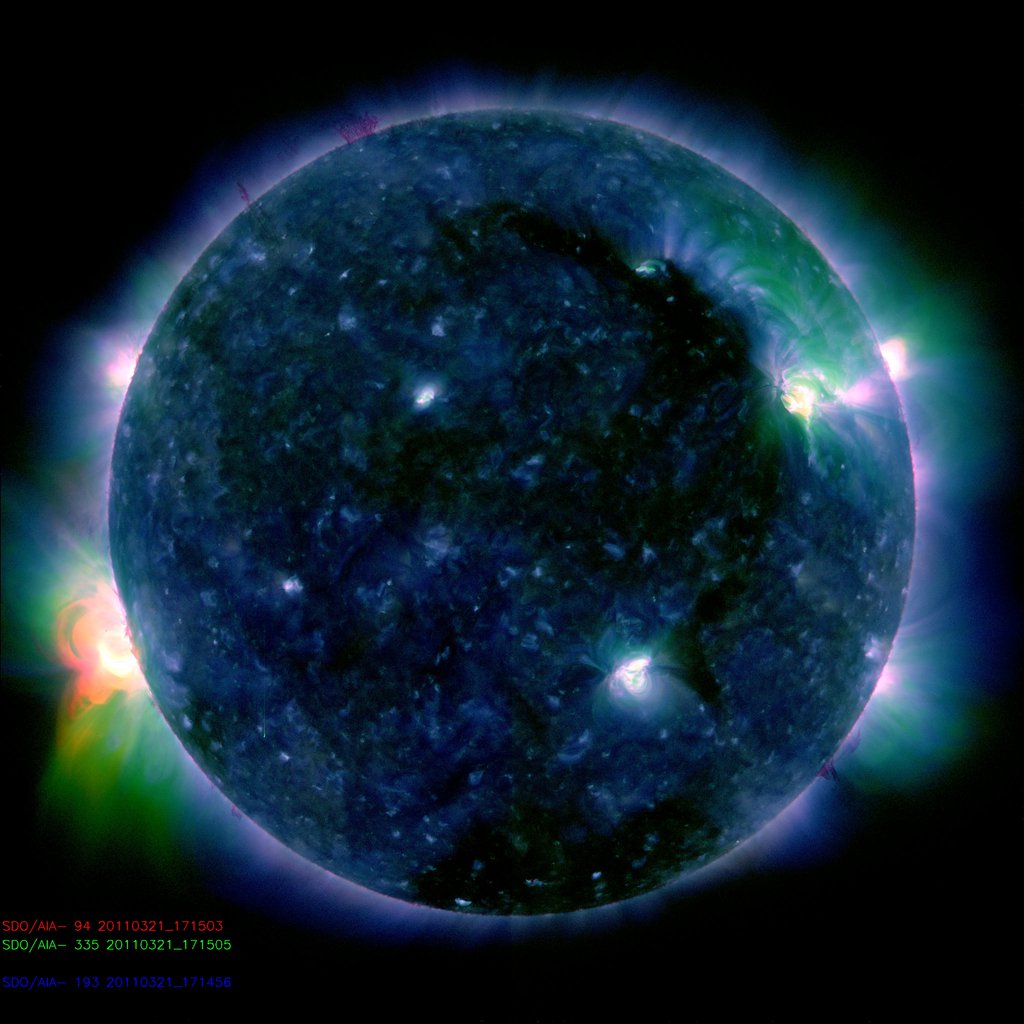
HERE COMES TROUBLE? A big sunspot is emerging over the sun's southeastern limb, and it is crackling with activity. NASA's Solar Dynamics Observatory recorded a surge of extreme ultraviolet radiation from the sunspot's magnetic canopy on March 21st:
This appears to be the return of old sunspot 1165, last seen in early March when it formed on the sun's southwestern limb. Since then it has been transiting the far side of the sun, apparently growing in size and restlessness. The potential for trouble will become more clear in the hours ahead as the active region emerges in full. Stay tuned.

Thursday, March 10, 2011

7.9 Earthquake Hits Japan...Changed to 8.8 and 7.2 at 28seconds apart

Here is a link that shows some live coverage...http:/ustream.tv/?lang=ja_JP
7.9 Earthquake hit Japan at

  • Friday, March 11, 2011 at 05:46:23 UTC
  • Friday, March 11, 2011 at 02:46:23 PM at epicenter
130 km (80 miles) E of Sendai, Honshu, Japan
178 km (110 miles) E of Yamagata, Honshu, Japan
178 km (110 miles) ENE of Fukushima, Honshu, Japan
373 km (231 miles) NE of TOKYO, Japan

High Tsunami Warning
Hawai'i http://www.weather.gov/ptwc/?region=2


Weather agency warns of tsunami as high as 10 feet hitting northeast - AP

 (AP) — Japanese television has shown major tsunami damage in northern Japan on Friday, following a magnitude-7.9 earthquake.
Public broadcaster NHK showed cars, trucks, houses and buildings being swept away by tsunami in Onahama city in Fukushima prefecture.http://hosted2.ap.org/APDEFAULT/633c954da7d9434f9de7ed15f38075aa/Article_2011-03-11-AS-Japan-Earthquake/id-ad11a1a5f3434dfdaaeea6319db43958
Japan update: Smoke seen rising from port; people rush out of Tokyo buildings
Huge earthquake in Tokyo. I'm ok.

Theoretical P-Wave Travel Times

Magnitude 7.9 NEAR EAST COAST OF HONSHU, JAPAN
Friday, March 11, 2011 at 05:46:23 UTC

Theoretical P-wave Travel Times
This map shows the predicted (theoretical) travel times, in minutes, of the compressional (P) wave from the earthquake location to points around the globe. The travel times are computed using the spherically-symmetric IASP91 reference earth velocity model. The heavy black lines shown are the approximate distances to the P-wave shadow zone (103 to 140 degrees).

Sunday, February 20, 2011

We MUST take solar storms seriously!


By Clara Moskowitz
Space.com
updated 2/19/2011 7:24:37 PM ET


Space weather could pose serious problems here on Earth in the coming years, the chief of the National Oceanic and Atmospheric Administration said today.


NASA SOHO
The image of the powerful Class X2 solar flare of Feb. 14, 2011, shows how it appeared to both the Solar Dynamics Observatory in extreme ultraviolet light (center sun disk) and the SOHO's C2 coronagraph. This was the largest flare in more than four years.

severe solar storm has the potential to take down telecommunications and power grids, and the country needs to work on being better prepared, said NOAA administrator Jane Lubchenco here at the annual meeting of the American Association for the Advancement of Science. Lubchenco is also the U.S. Under Secretary of Commerce for Oceans and Atmosphere.
"This is not a matter of if, it's simply a matter of when and how big," Lubchenco said of the potential for a dangerous solar flare. "We have every reason to expect we're going to be seeing more space weather in the coming years, and it behooves us to be smart and be prepared."
Ramping up The space weather threat is becoming more dire as our sun ramps up toward its period of solar maximum, predicted for around 2013. Activity on the sun fluctuates on a roughly 11-year cycle, and our star has been relatively dormant for a while.
That's clearly starting to change, though, as evidenced by a class X solar flare – the strongest kind – that erupted from the sun Feb. 14.
The Feb. 14 flare unleashed a wave of charged particles that streamed immediately toward Earth, as well as coronal mass ejections, or blobs of plasma, that took days to arrive here. When they did, they interacted with Earth's magnetic field to cause geomagnetic storms that wiped out radio communications in the Western Pacific Ocean and parts of Asia, and caused airlines to reroute some polar flights to avoid radio outages."I think the events of this week certainly underscore how important it is for us to be paying attention to space weather and to be prepared to respond to, and mitigate, potential impacts," Lubchenco said. "As we enter into a period of enhanced solar activity it seems pretty clear that we are going to be looking at the possibility of not only more solar events but also the possibility of some very strong events."
Next time could be worse However, experts say we got off fairly lucky with this recent solar storm, and that future eruptions could cause worse damage, particularly to the sensitive transformers and capacitors in power grids. If some of these were harmed, there could be power outages for days, weeks, months, or even, in the case of severe damage, years, experts warned.
"It turned out that we were quite well protected this time, so not much happened," said European Space Agency scientist Juha-Pekka Luntama. "In another case things might have been different."
Space weather hasn't posed quite such a threat before, because during the last solar maximum, around 10 years ago, the world wasn't as dependent on satellite telecommunications, cell phones and global positioning system (GPS) – all technologies that could be disrupted by solar flares.
"Many things we take for granted today are so much more prone to the effects of space weather than was the case during the last maximum," Lubchenco said. The problem is likely to get even worse as the world could likely become more technologically dependent by the time the next solar maximum rolls around, and the next.
Slightly scary Other experts agree that the risk must be addressed.
"It is slightly scary, and I think properly so," said John Beddington, the U.K. government's chief scientific adviser. "We've got to be scared by these events otherwise we will not take them seriously."
He and other European officials said the world needs greater international cooperation to meet the threat of dangerous space weather.
"There are few emergency scenarios today that require such close cooperation across the Atlantic as a geomagnetic storm," said Helena Lindberg, director general for the Swedish Civil Contingencies Agency (MSB).
We have an "urgent need to start sharing expertise and connecting our systems for warning and for response," Lindberg said. "This cooperation has to be put in place before a disaster hits."
Despite the risk, though, some experts stressed that there's reason to be optimistic. There is work being done to improve our ability to forecast solar storms in advance, equip more satellites with radiation shielding and fortify power grids with resilient transformers and capacitors.
"Please don’t panic," said Stephan Lechner of the Institute for the Protection and Security of the Citizen at the European Commission's Joint Research Centre. "Please don't leave the room and tell everybody that space weather will kill us tomorrow."

Thursday, February 17, 2011

Dodging a Huge Geomagnetic Storm...

Earth dodges geomagnetic storm: scientist

Earth dodges geomagnetic storm: scientistAFP/NASA/File – NASA image shows a solar flare that leapt from the Sun in 2000. A wave of charged plasma particles from …
WASHINGTON (AFP) – A wave of charged plasma particles from a huge solar eruption has glanced off the Earth's northern pole, lighting up auroras and disrupting some radio communications, a NASAscientist said.
But the Earth appears to have escaped a widespread geomagnetic storm, with the effects confined to the northern latitudes, possibly reaching down into Norway and Canada.
"There can be sporadic outages based on particular small-scale events," said Dean Persnell, project scientist at NASA's Solar Dynamics Observatory at Goddard Space Flight Center.
He told AFP the official forecast is "for generally quiet conditions today, perhaps some minor storming tomorrow, but nothing extraordinary."
The event began Tuesday at 0156 GMT with a spectacular solar eruption in a sunspot the size of Jupiter that produced a Class X flash -- the most powerful of all solar events.
The eruption blasted a torrent of charged plasma particles called a coronal mass ejection (CME) toward Earth at about 560 miles per second (900 kilometers per second), the Solar Dynamics Observatoryreported.
A direct hit from a CME could trigger a huge geomagnetic storm as incoming particles bounce off the Earth's geomagnetic field, blacking out radio communications, interfering with GPS navigational systems, in theory even causing power outages.
The China Meteorological Administration reported that the solar flare caused "sudden ionospheric disturbances" in the atmosphere above China and jammed shortwave radio communications in the southern part of the country.
Anticipating the worst, the US National Weather Service's Space Weather Prediction Service warned it was "the calm before the storm."
"Three CMEs are enroute, all a part of the Radio Blackout events on February 13, 14, and 15 (UTC). The last of the three seems to be the fastest and may catch both of the forerunners about mid to late ... February 17."
But Persnell said the spiraling beam of solar particles from Tuesday's eruption was passing behind the Earth without making a direct hit.
"In this case, it appears it will curve around and not hit us," he said.
He said satellite data "shows that the CME is quieting down and so there is not a whole lot left to it. So it's moved well behind us by now," he said.
But he said solar activity is on the upswing, and more CMEs will follow.
"We are seeing more and more sunspots as what we call solar cycle 24 is turning on," he said. "At the peak we might see several of these CMEs a day coming off the sun."
"But they have only a five to ten percent chance of hitting us. We have to be in exactly the right place for that piece of spiral to come hit us. We'll see many more coming off the sun than we have hitting us here on Earth."
The British Geological Survey (BGS) said, meanwhile, that the solar storm would result in spectacular Northern Lights displays starting Thursday.
One CME reached Earth on February 14, "sparking Valentine's Day displays of the Northern Lights (auroraborealis) further south than usual."
The office published geomagnetic records dating back to the Victorian era which it hopes will help in planning for future storms.
"Life increasingly depends on technologies that didn't exist when the magnetic recordings began," said Alan Thomson, BGS head of geomagnetism.
"Studying the records will tell us what we have to plan and prepare for to make sure systems can resist solar storms," he said.
A 2009 report by a panel of scientists assembled by NASA said that a sustained and powerful solar flare outbreak could overwhelm high-voltage transformers with electrical currents and short-circuit energy grids.
The report, titled "Severe Space Weather Events -- Understanding Societal and Economic Impacts" warned that such a catastrophic event could cost the United States alone up to two trillion dollars in repairs in the first year -- and it could take up to 10 years to fully recover.