Showing posts with label jihadist. Show all posts
Showing posts with label jihadist. Show all posts
Wednesday, May 29, 2013


Thursday, October 18, 2012
Defining al Qaeda
Defining al Qaeda
By Scott Stewart
The Obama administration's efforts to counter the threat posed by al Qaeda and the wider jihadist movement have been a contentious topic in the U.S. presidential race. Political rhetoric abounds on both sides; administration officials claim that al Qaeda has been seriously crippled, while some critics of the administration allege that the group is stronger than ever. As with most political rhetoric, both claims bear elements of truth, but the truth depends largely on how al Qaeda and jihadism are defined. Unfortunately, politicians and the media tend to define al Qaeda loosely and incorrectly.
The jihadist threat will persist regardless of who is elected president, so understanding the actors involved is critical. But a true understanding of those actors requires taxonomical acuity. It seems worthwhile, then, to revisit Stratfor's definitions of al Qaeda and the wider jihadist movement.
A Network of Networks
Al Qaeda, the group established by Osama bin Laden and his colleagues, was never very large -- there were never more than a few hundred actual members. We often refer to this group, now led by Ayman al-Zawahiri, as the al Qaeda core or al Qaeda prime. While the group's founders trained tens of thousands of men at their camps in Afghanistan and Sudan, they initially viewed themselves as a vanguard organization working with kindred groups to facilitate the jihad they believed was necessary to establish a global Islamic caliphate. Most of the men trained at al Qaeda camps were members of other organizations or were grassroots jihadists. The majority of them received basic paramilitary training, and only a select few were invited to receive additional training in terrorist tradecraft skills such as surveillance, document forgery and bombmaking. Of this select group, only a few men were invited to join the al Qaeda core organization.
Bin Laden envisioned another purpose for al Qaeda: leading the charge against corrupt rulers in the Muslim world and against the United States, which he believed supported corrupt Muslim rulers. Al Qaeda sought to excise the United States from the Muslim world in much the same way that Hezbollah drove U.S. forces out of Lebanon and Somalia forced the U.S. withdrawal from Mogadishu.
Al Qaeda became a network of networks -- a trait demonstrated not only by its training methods but also in bin Laden's rhetoric. For example, bin Laden's 1998 "World Islamic Front" statement, which declared jihad against Jews and Crusaders, was signed by al-Zawahiri (who at the time was leading the Egyptian Islamic Jihad) and leaders of other groups, including the Egyptian Islamic Group, Jamiat-ul-Ulema-e-Pakistan and the Jihad Movement of Bangladesh.
Following the 9/11 attacks, the United States applied against the al Qaeda core the full pressure of its five counterterrorism levers: intelligence, military, law enforcement, diplomacy and financial sanctions. As a result, many al Qaeda members, eventually including bin Laden, were captured or killed and their assets were frozen. Such measures have ensured that the group remains small for operational security concerns. The remaining members of the group mostly are lying low in Pakistan near the Afghan border, and their isolation there has severely degraded their ability to conduct attacks. The al Qaeda core is now relegated to producing propaganda for guidance and inspiration for other jihadist elements. Despite the disproportionate amount of media attention given to statements from al-Zawahiri and Adam Gadahn, the al Qaeda core constitutes only a very small part of the larger jihadist movement. In fact, it has not conducted a successful terrorist attack in years.
However, the core group has not been destroyed. It could regenerate if the United States eased its pressure, but we believe that will be difficult given the loss of the charismatic bin Laden and his replacement by the irascible al-Zawahiri.
In any case, the jihadist movement transcends the al Qaeda core. In fact, Stratfor for years published an annual forecast of al Qaeda, but beginning in 2009, we intentionally changed the title of the forecast to reflect the isolation and marginalization of the al Qaeda core and the ascendance of other jihadist actors. We believed our analysis needed to focus less on the al Qaeda core and more on the truly active and significant elements of the jihadist movement, including regional groups that have adopted the al Qaeda name and the array of grassroots jihadists.
Franchises and Grassroots
An element of the jihadist movement that is often loosely referred to as al Qaeda is the worldwide network of local or regional militant groups that have assumed al Qaeda's name or ideology. In many cases, the relationships between the leadership of these groups and the al Qaeda core began in the 1980s and 1990s.
Some groups have publicly claimed allegiance to the al Qaeda core, becoming what we refer to as franchise groups. These groups include al Qaeda in Iraq, al Qaeda in the Islamic Maghreb and al Qaeda in the Arabian Peninsula. Even though these franchises bear the al Qaeda name, they are locally owned and operated. This means that the local commanders have significant latitude in how closely they follow the guidance and philosophy of the al Qaeda core.
Some franchise group leaders, such as AQAP's Nasir al-Wahayshi, maintain strong relationships with the al Qaeda core and are very closely aligned with the core's philosophy. Other leaders, such as Abu Musab Abd al-Wadoud of AQIM, are more distanced. In fact, AQIM has seen severe internal fighting over these doctrinal issues, and several former leaders of Algeria's Salafist Group for Preaching and Combat left the group because of this conflict. Further, it is widely believed that the death of Somali al Qaeda leader Fazul Abdullah Mohammed was arranged by leaders of Somali jihadist group al Shabaab, which he had criticized sharply.
The last and broadest element of the global jihadist movement often referred to as al Qaeda is what Stratfor refers to as grassroots jihadists. These are individuals or small cells of individuals that are inspired by the al Qaeda core -- or increasingly, by its franchise groups -- but that may have little or no actual connection to these groups. Some grassroots jihadists travel to places such as Pakistan or Yemen to receive training from the franchise groups. Other grassroots militants have no direct contact with other jihadist elements.
The core, the franchises and the grassroots jihadists are often interchangeably referred to as al Qaeda, but there are important differences among these actors that need to be recognized.
Important Distinctions
There are some other important distinctions that inform our terminology and our analysis. Not all jihadists are linked to al Qaeda, and not all militant Islamists are jihadists. Islamists are those who believe society is best governed by Islamic law, or Sharia. Militant Islamists are those who advocate the use of force to establish Sharia. Militant Islamists are found in both Islamic sects. Al Qaeda is a Sunni militant Islamist group, but Hezbollah is a Shiite militant Islamist group. Moreover, not all militant Muslims are Islamists. Some take up arms for tribal, territorial, ethnic or nationalistic reasons, or for a combination of reasons.
In places such as Iraq, Afghanistan, Yemen, Libya and northern Mali, several militant groups are fighting foreign forces, their government or each other -- and sometimes all of the above. Some of these groups are jihadists, some are tribal militias, some are brigands and smugglers, and others are nationalists. Identifying, sorting and classifying these groups can be very difficult, and sometimes alliances shift or overlap. For example, Yemen's southern separatists will sometimes work with tribal militias or AQAP to fight against the government; other times, they fight against these would-be allies. We have seen similar dynamics in northern Mali among groups such as AQIM, Ansar Dine, the Movement for Unity and Jihad in West Africa, various Tuareg groups and other tribal militias in the region.
Taxonomy becomes even more difficult when a group uses multiple names, or when multiple groups share a name. Groups adopt different names for discretion, confusion or public relations purposes. AQAP called itself Ansar al-Shariah during its fight to take over cities in southern Yemen and to govern the territory. But radical cleric Abu Hamza al-Masri, who was arrested in the United Kingdom in 2004 and extradited to the United States in 2012, has long led a movement likewise called Ansar al-Shariah. Even the Libyan jihadist militia that attacked the U.S. Consulate in Benghazi uses the same name. But just because these groups share a name, and just because members or leaders of the groups know each other, does not necessarily mean that they are chapters of the same group or network of groups, or that they even subscribe to the same ideology.
Read more: Defining al Qaeda | Stratfor
Saturday, October 6, 2012
Terrorism Tradecraft
Terrorism Tradecraft
October 4, 2012
By Scott Stewart
One of the distinctive features of Stratfor's terrorism and security analysis is its focus on the methodology of attacks. Of course, identifying those responsible for an attack is important, especially in ensuring that the perpetrators are brought to justice. But Stratfor believes that analyzing the way in which an attack was conducted is more important because it can prevent future attacks and protect potential victims. It is likewise important to recognize that even if a terrorist is killed or arrested, other groups and individuals share terrorist tactics. Sometimes this comes from direct interaction. For example, many of the Marxist terrorist groups that trained together in South Yemen, Lebanon and Libya in the 1980s employed similar tactics. Otherwise, a tactic's popularity is derived from its effectiveness. Indeed, several terrorist groups adopted airline hijacking in the 1960s and 1970s.
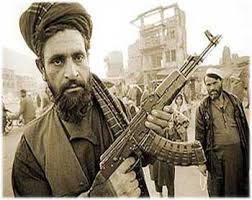
The mechanics of terrorism go far beyond target selection and the method of attack. This is especially true of aspiring transnational terrorists. Basic military skills may be helpful in waging terrorist attacks in areas where a militant group has access to men, weapons and targets -- such was the case with Ansar al-Sharia in Benghazi, Libya -- but an entirely different set of skills is required to operate in a hostile environment or at a distance. This set of skills is known as terrorist tradecraft.
 Foundational Skills
Before an attack can be planned, an aspiring terrorist group must be organized, funded and trained. Would-be terrorists in Libya, Yemen or Pakistan's North Waziristan agency can achieve these things relatively easily. However, aspiring terrorists in New York, London and Paris encounter more difficulty. The recent arrests of such terrorists in the West, most recently the Sept. 15 arrest of a would-be jihadist in Chicago, show just how difficult it can be to find like-minded individuals to organize a terrorist cell.
Therefore, operational security is a critical skill that must be mastered to protect the fledgling organization from infiltration by law enforcement or intelligence agencies. Every person brought into the group decreases the group's operational security. So the very existence of the group must remain hidden, and every new member must be thoroughly vetted to ensure they are not plants. As the organization matures and becomes involved in actual attacks, operational security will continue to be vitally important to the organization's success and survival.
A key sub-skill to operational security is the ability to procure false identification documents. False identification is required for more than just international travel; these documents are required for domestic travel as well as for commercial transactions, such as buying or renting vehicles, procuring safe-houses and purchasing firearms, explosives and other components of manufactured explosives and improvised explosive devices. False documents are more important for operatives or organizations that want to attack continually than they are for suicide bombers, provided the authorities do not know the identity of the bomber and provided the bomber can travel to the operational destination.
Establishing a secure form of communication is also a priority. As a terrorist group grows, communication tradecraft must evolve beyond the verbal communication. Naturally, the more members a group has, and the farther away they are from one another, the more challenging secure communication becomes.
Once a group is securely organized, the members must fund their operations. Indeed, the ability to transfer funds clandestinely is a skill closely related to communication. Funding varies greatly from organization and location. Some terrorist groups obtain funding from the surrounding population. In places where the group is seen as fighting a colonial power or a dictator, financial support may be willingly given. In other circumstances, the population may give support grudgingly through extortion or informal taxes levied by the terrorist group.
State sponsors are another source of funding, as are wealthy individuals sympathetic to the terrorists' causes. Terrorists also are funded through illegal activity, including large-scale narcotics sales, which are frequently used by the Revolutionary Armed Forces of Colombia and the Taliban. Hezbollah generates revenue through cigarette tax fraud and through selling counterfeit goods and fake prescription drugs. Kidnapping is also an age-old method of funding terrorism.
The Attack
With organizational structure and funding in place, the terrorist organization can then turn to acquiring the skills necessary to conduct an attack. But to understand the tradecraft skills required to conduct an attack, one must first recognize that attacks do not happen randomly. They are the result of planning that follows a discernible attack cycle.
Perhaps the most important tradecraft skill in the attack planning cycle is surveillance tradecraft, or the ability to observe a potential target without alerting anyone that the target is being watched. The vulnerabilities noted during surveillance are frequently used in selecting the target. Further surveillance is often used to plan the attack, and then another round of surveillance may be conducted as part of the attack to track the target's progress to the attack site.
Planning the attack is another tradecraft skill, which requires the ability to observe a target, identify a security weakness and then contrive a means to exploit the vulnerability. The best planners devise novel approaches, such as using jumbo jets as human-guided cruise missiles, or invent ways to disguise more traditional devices, like improvised explosive devices, in such items as dolls, radios, shoes, underwear, bottles of contact lens solution, brassieres and pregnancy prosthetics.
An attack tradecraft component that has often proved vulnerable during the attack planning cycle is weapons acquisition. In fact, many attacks were disrupted when the plotters attempted to procure firearms or explosives.
Projecting Power
Generally, these tradecraft skills are not concentrated in one member of a terrorist organization. Some people will be proficient at surveillance while some have a knack for making money or procuring weapons. Others may be good at manufacturing improvised explosive mixtures or assembling improvised explosive devices. However, this is true only of groups operating in their native areas.
The problem comes when a group wants to project power and conduct transnational attacks outside its core territory. In such a case, the group must identify a person proficient in a number of these tradecraft skills who can conduct an operation alone or with the assistance of a small group. This person must also be able to travel to the targeted country -- a requirement that has caused groups like al Qaeda in the Arabian Peninsula to attempt transnational strikes from afar. The fact that the al Qaeda franchise's attempts to go long have all failed -- the underwear bomber and the printer bomb plots, for example -- demonstrates how difficult such plots are.
source: http://www.stratfor.comRead more: Terrorism Tradecraft | Stratfor
Terrorist Recognition Handbook
A Practitioner's Manual for Predicting and Identifying Terrorist Activities, Second Edition


for more, here is the link to get the book: http://www.crcnetbase.com/doi/book/10.1201/9781420071849
Monday, September 17, 2012
Compare The Occupy Wall Street Flags To The Jihadist Flags.
DOES OCCUPY WALL STREET KNOW ITS FLAG LOOKS LIKE A JIHADIST BANNER?
Occupy Wall Street will be marking the one year anniversary of the movement on Monday, September 17th, with a series of direct actions and protest marches across lower Manhattan. It‘s anybody’s guess whether they will really do what they say they’re going to this time, but there are some disconcerting early signs.
I took a stroll through their General Assembly the Saturday before #S17, as they call it (using the twitter hashtag as a catch-all for the event) and saw the usual gathering of leftists, oddballs, and assorted Marxist wanna-be revolutionaries.
But something unusual caught my eye: take a look at the latest addition to the Occupy propaganda arsenal:

(photo credit: Buck Sexton)
I saw a few of these black “Occupy” flags emblazoned with white writing in Washington Square Park. Below, you can see the “Occupy” flag held above the tactical General Assembly. Many of the facilitators (leaders) were familiar to me from last year, and this General Assembly was clearly a who’s who of the Occupy Movement in NYC.

(photo credit: Buck Sexton)
To be fair, there have been black flags present in the Occupy movement before, and they were used by anarchist movements way back in the late 19th century. But these were different.
I have seen entirely black flags carried by members of the “Black Bloc” (a tactic, not a group, as those who employ it often point out) in the Occupy movement. And a large “A” with a circle around it is well-known as the anarchist’s calling card of choice.
But black flags with white writing?
It resembles a Jihadist flag.
Given the amount of preparation for the #S17 anniversary of the OWS Movement, one would expect Occupiers to have some understanding of the imagery they use and how it will be viewed by the rest of the world.
While only hundreds may show up tomorrow, there are likely to be many reporters covering all the events. And I think some Americans may have the same reaction to the Occupy flag I did when it beams across their television screen.
Last week, Americans suffered through the horror of an assassinated U.S. Ambassador, with three other Americans killed at his side. These Americans were working for the consulate of a country that had been saved from threatened genocide and liberated from a tyrant by U.S. and NATO efforts.

(AFP/Getty Images)
Mere hours before those atrocities, a rampaging mob in Egypt attacked the U.S. Embassy in Cairo on the eleven year anniversary of 9/11. The rioters tore down and desecrated the American flag before raising up the black banner of Jihad (example above). Images of the Islamist black banners shot across the world in minutes.

(Mohammed Abu Zaid, AP )
You can see several of the Jihadist flags– including the Al Qaeda specific variant– in the photo at right, taken at the U.S. Embassy in Cairo. On top of the wall is the Al Qaeda version. You can see the more ornate script of the “Shahada,” which is an inscription often found on general use Islamist/Jihadist flags, at bottom right. The script contains the Islamic profession of faith, “there is no God but God, and Muhammad is his prophet.”
A bit of background: the black flag of the Islamist is taken from the “Black Banners of Khurasan,“ which are words found in a hadith about an Islamic army rising up from what is the roughly called the ”stans” area (Tajikistan, Uzbekistan, Afghanistan, parts of Pakistan) and conquering their enemies in a sort of end of days scenario.
Defenders of Occupy Wall Street would no doubt claim that these similarities– white writing on a black background– are not an endorsement of Islamism and have nothing to do with Al Qaeda. Even if we take that as wholly true, it seems rather irresponsible and offensive to be marching around lower Manhattan with flags that could evoke the horrific events in North Africa from last week– not to mention even a vague similarity to Al Qaeda’s emblem.
It is also bears reminding that Solidarity with Cairo and Tahrir square has been a hallmark of the Occupy Wall Street movement in the past. I sat and listened to Occupy speakers a year ago proclaim that the revolution sweeping the Arab Spring would soon come to America. It obviously hasn’t happened yet, but the Occupiers themselves drew the comparisons to Mid-East revolutions then.

Black Bloc on May Day (photo credit: Buck Sexton)
We also know that a number of protestors in Cairo donned Guy Fawkes masks in what can only be described as an act of solidarity with the Occupy movement during their assault on the Embassy.
Occupy is a political movement, not a sports team. The choice of black symbols and imagery all has a purpose and context.
For a movement that has made “wealth inequality” its central theme, one would think that a nice baby blue flag with “spread the wealth” or “free love” on it would be a much more appropriate than what is–at best– an ominous anarchist flag that is perhaps evocative of a pirate’s Jolly Roger.
But of course, bringing the system down and “revolution” have always been part of the Occupiers’ stated goals, no matter how disconnected they are from reality. A black flag does well to represent such destructive ends.
Occupiers won’t get any closer to revolution by marching around Manhattan on #S17, but their decisions about imagery tell us they are either tone deaf to events in the world, or are willing to express subtle solidarity with radical, violent elements with which the United States remains at war.
After today’s #s17 events, perhaps we will have a better sense of which it is.
source: http://www.theblaze.com
Nearly 150 arrested at Occupy protest on one-year anniversary

Nearly 150 arrested at Occupy protest on one-year anniversary
John Makely / NBC News
An arrest on Wall Street as Occupy protesters circulate through the financial district trying to disrupt business on Sept. 17.
NEW YORK, Updated at 4:00 p.m. ET -- Looking to reignite their movement on its one-year anniversary, several hundred Occupy Wall Street activists protested in lower Manhattan Monday, staging a sit-in near the iconic New York Stock Exchange and swarming through the streets in costumes and toting American flags and signs.
Police said 146 protesters were arrested, mostly for disorderly conduct. Earlier Monday, protester Michael Aaron said some religious leaders and dozens of others were arrested after sitting down in the street and on the sidewalk, blocking the thoroughfares.
"We're just at year one. We have a really big mountain to climb. But we're hoping to get the power back to the people," said Kim Fraczek, 37, who wore an Obama mask. She was with a man, Erik McGregor, 44, who had on a Romney one. They said they were aiming to show the two were controlled by money.
"In our bipartisan system, when the two candidates for presidency are doing everything to kneel down to the corporations and banks and turn against the people, it doesn't matter who you vote for, because the war machine will continue," said Fraczek, a handbag and jewelry designer.
The early morning protests and marches were marked by festive cheer, with demonstrators throwing confetti and glitter, carrying balloons and singing "happy birthday." But some protesters also reflected a more somber tone on the anniversary of the day when they set up a nearly two-month camp in nearby Zuccotti Park to protest against income inequality, corporate greed and money in politics.
source: http://usnews.nbcnews.com
Thursday, July 26, 2012
The Persistent Threat to Soft Targets, Which Includes Threats Like James Holmes
By Scott Stewart
July 26, 2012 | 0904 GMT
In the early hours of July 20, a gunman entered a packed movie theater in Aurora, Colo., and opened fire on the audience that had gathered to watch the premiere of the new Batman movie, The Dark Knight Rises. The gunman killed 12 people and injured 58 others. Though police are looking for potential accomplices, the attack appears to have been conducted by James Holmes, a lone gunman who, according to some police reports, may have had a delusional fixation on the Joker, a violent villain from an earlier Batman movie.


On July 18, just two days before the Colorado attack, a man reportedly disguised in a wig and posing as an American tourist in the Black Sea resort town of Burgas, Bulgaria, detonated an improvised explosive device hidden in his backpack as a group of Israeli tourists boarded a bus bound for their hotel. The blast killed five Israelis and the Bulgarian bus driver and wounded dozens more. It is unclear if the incident was an intentional suicide attack; the device could have detonated prematurely as the man placed it on the bus. In any case, the tourists clearly were the intended targets.
 The Burgas attacker has not yet been identified. Based on his profile, there is some speculation that he could have been a grassroots jihadist. However, it is also possible that he was acting on behalf of Iran and that this attack was merely the latest installment in the ongoing covert war between Iran and Israel.
While these two attacks occurred on different continents and were committed by people with different motivations and objectives, they nonetheless have one thing in common: They were directed against what are referred to in security parlance as "soft" targets, or targets that do not have much security. Soft targets are much easier to attack than hard targets, which deter attacks by maintaining a comparatively strong security presence.
Evolution of Targets and Tactics
In the 1960s, the beginning of the modern terrorism era, there were few hard targets. In the 1970s, the American radical leftist Weather Underground Organization was able to conduct successful bombing attacks against the U.S. Capitol, the Pentagon and the State Department buildings -- the very heart of the U.S. government. At the same time commercial airliners were easy targets for political dissidents, terrorists and criminal hijackers.
...During the 1970s, militant groups seized control of embassies in several cities, including Stockholm, The Hague, Khartoum and Kuala Lumpur. The 1970s concluded with the seizure of the U.S. Embassy in Tehran and the storming and destruction of the U.S. Embassy in Islamabad. The 1980s saw major attacks against U.S. diplomatic posts in Beirut (twice) and Kuwait.
Just as the Weather Underground Organization attacks prompted security improvements at the U.S. government buildings they had targeted, the attacks against U.S. and other embassies prompted increased security at their diplomatic missions. However, this turned into a long process. The cost of providing security for diplomatic posts strained already meager foreign affairs budgets. For most countries, including the United States, security was not increased at all diplomatic missions. Rather, security was improved in accordance with a threat matrix that assessed the risk levels at various missions. Those deemed more at risk received funding before those deemed less at risk.
 ...Transnational groups also changed regions to find softer embassy targets. This shift was evident in August 1998, when al Qaeda attacked U.S. embassies in Nairobi, Kenya, and Dar es Salaam, Tanzania. Similarly, during the 1991 Gulf War, Iraqi agents attempted to conduct terrorist attacks against U.S. diplomatic facilities in Manila, Jakarta, Bangkok and Beijing -- far from the Middle East. The February 2012 attack against an Israeli Embassy employee in New Delhi is an example of both changing the region and targeting an employee away from the security of the embassy.
...While some jihadists have remained fixated on hardened airline targets, other attackers -- especially grassroot and lone wolf attackers who do not possess the ability to attack hardened targets -- have sought other, softer airline targets to attack. After Israeli airline El Al beefed up security on its airliners in the 1980s, the Abu Nidal Organization compensated by attacking crowds of El Al customers at ticket counters outside of airport security in Rome and Vienna in 1985. Then in November 2002, jihadists attempted to attack an Israeli airliner in Mombasa, Kenya, with SA-7 surface-to-air missiles. More recently, a dual suicide bombing in the arrival lounge of Moscow's Domodedovo Airport in January 2011 killed 35 and injured more than 160, proving that areas outside an airport's security measures are vulnerable to attack. Further illustrating this vulnerability was an attack at an airport in Frankfurt, Germany, in March 2011. In that attack, a jihadist killed two U.S. airmen and wounded two others at the airport's bus departure area.
Other Targets
...While attacks against soft targets are an unfortunate prospect in the contemporary world -- if not throughout all human history -- people are not helpless in defending against them. Terrorism is a continuing concern, but it is one that can be understood. Once understood, measures can be taken to thwart terrorist plots and mitigate the effects of attacks.
Perhaps the most important and fundamental point to understand about terrorism is that attacks do not appear out of nowhere. Individuals planning a terrorist attack follow a discernible cycle, and that cycle and the behaviors associated with it can be detected. The places where terrorism-related behavior can be most readily observed are referred to as vulnerabilities in the terrorist attack cycle.

As the attacks in Aurora and Burgas are investigated, authorities very likely will uncover behaviors in the perpetrators that could have prevented the attacks if they were properly investigated. Every attacker -- even a lone wolf assailant -- leaves evidence of a pending attack. This fact was brought up by the recent release of a report by the William H. Webster Commission into the investigation of 2009 Ft. Hood shooter Nidal Hasan. The report highlighted the mistakes made in the investigation of Hasan, who was brought to the FBI's attention prior to the attack.
But since it is impossible for any government to prevent all attacks, people have to assume responsibility for their own security. This means citizens need to report possible planning activity when it is spotted. Such reporting helped avert an attack in July 2011 against a restaurant outside of Ft. Hood, Texas.
Read the rest at : The Persistent Threat to Soft Targets | Stratfor
Subscribe to:
Posts (Atom)
By Kevin Murphy
KANSAS CITY, Kan., May 25 (Reuters) - Republican Kansas Governor Sam Brownback signed a bill aimed at keeping state courts and agencies from using Islamic or other non-U.S. laws when making decisions, his office said on Friday, drawing criticism from a national Muslim group.
The law has been dubbed the "sharia bill" because critics say it targets the Islamic legal code. Sharia, or Islamic law, covers all aspects of Muslim life, including religious obligations and financial dealings. Opponents of state bans say they could nullify wills or legal contracts between Muslims.
Supporters said the law will reassure foreigners in Kansas that state laws and the U.S. Constitution would protect them. Opponents said it singled out Muslims for ridicule and was unnecessary because American laws prevail on U.S. soil.
Sherriene Jones-Sontag, a spokeswoman for the governor, said in an e-mail that the bill "makes it clear that Kansas courts will rely exclusively on the laws of our state and our nation when deciding cases and will not consider the laws of foreign jurisdictions."
Legislators supporting the bill said there were many cases around the country where judges or state agencies cited sharia law in deciding cases, especially involving divorce-related custody and property matters where Islamic code differs from U.S. law.
The Council on American-Islamic Relations in Washington denounced the Kansas law and said it is considering legal action.
About 20 states have considered similar legislation but the Kansas law is the only one signed in recent weeks, council spokesman Ibrahim Hooper said.
"It's unfortunate the governor chose to pander to the growing Islam-phobia in our society that has led to introduction of similar unconstitutional and un-American legislation in dozens of state legislatures," Hooper said.
Hooper said legislators have often referred to sharia law in supporting such legislation, but he said they take the word out of the bill to stave off legal challenges. The Kansas bill does not mention sharia.
Federal courts struck down an Oklahoma law voters approved in 2010 that barred state judges from considering sharia law in making decisions. The court called the law discriminatory. (Editing by Greg McCune and Stacey Joyce)
Scrubbing the Internet and gagging clerics will not eradicate the anger felt by Muslims when they witness the outcome of US and American wars in Iraq, Afghanistan and elsewhere on their TV screens. That anger is justifiable; the way that a few — like the 7/7 London transport bombers, the Boston bombers and the two men who boasted about carving up a British soldier — unleash their fury on innocents, who have no say over their government’s actions, is cowardly and abhorrent. Moreover, they’re no warriors for Islam when the faith explicitly states that killing one innocent is akin to slaying all of humanity.
Leaders of Muslim communities in the UK have loudly condemned the barbaric incident but law-abiding British Muslims are suffering a backlash from right-wing groups, such as the British National Party (BNP) and the English Defense League (EDL), which have organized marches to ignite Islamophobic sentiment. The leader of the BNP says mass immigration is to be blamed and the perpetrators should be shot again and wrapped in pigskin. The EDL announced the movement is “at war” with Islamic extremism. British Muslims are being targeted by balaclava-wearing Nazi-leaning fascists. In recent days, mosques have come under attack or daubed with racist graffiti. Muslims are being spat at or threatened in the streets; women’s head scarves are being pulled off their heads by passersby. In short, Muslims in Britain are living in fear through no fault of their own.
However, British authorities don’t have clean hands either. The real scandal is that one of the perpetrators Michael Adebolajo, the son of Nigerian Christian immigrants, was known to UK anti-terror units three years prior to the attack after his arrest in Kenya when he was suspected of participating in an Al-Qaeda inspired plot. Upon his return to the UK, his family and friends say MI5 pressured him to infiltrate extremist groups and spy on Muslim scholars, which he allegedly refused to do. Likewise the dead Boston bomber Tamerlan Tsarvaev was added to a CIA watch list following a tip-off from Moscow, 18 months before his home-made bomb exploded at the marathon’s finishing line.
History confirms that both the UK and the US have on occasion worked closely with Islamists and jihadists since the 1950s on the basis of as long as they’re “our terrorists” they’re good fellows. There are numerous examples dating back to the era of Egyptian President Gamal Abdel Nasser who swayed toward the Soviet Union.
In his memoir “The Game of Nations: The Amorality of Power Politics,” US intelligence veteran Col. W. Patrick Lang describes how the CIA sought to undermine Nasser’s popularity and nationalist spirit by seeking out “a religious spellbinder” on the lines of Egypt’s answer to Billy Graham. The CIA’s man in Cairo, Miles Copeland, came across the Muslim Brotherhood (MB) and worked with the organization to topple the Egyptian leader, albeit unsuccessfully. Robert Baer writes in his book “Sleeping with the Devil” that the CIA funneled support to the MB because of “the Brotherhood’s commendable ability to overthrow Nasser.”
It won’t be news to you that the CIA was instrumental in the coup that rid Iran of its democratically-elected Prime Minister Mohammed Mossadegh and worked to overthrow the Shah. But you may not realize that the CIA and Britain’s MI6 actively promoted the Ayatollah Khomeini to the extent that prior to his return from exile in France, the Iranians dubbed the BBC “The Ayatollah BBC.”
Fast forwarding to the Soviet occupation in Afghanistan, Al-Qaeda’s main training base “Bayt Al-Ansar” was founded with the assistance of the CIA chief in Peshawar at a time when the US manipulated religious belief to attract anti-Soviet jihadists to fight against communism. Under the umbrella of NSDD 166, the US took part in the radicalization of Afghan schoolchildren, encouraging them to join the anti-Soviet resistance with textbooks promoting jihad and featuring violent images.
Michel Chossudovsky, a Canadian professor and author, wrote, “Advertisements paid for from CIA funds, were placed in newspapers and newsletters around the world offering inducements and motivations to join the Jihad.” “Under the Reagan administration, US foreign policy evolved toward the unconditional support and endorsement of the Islamic “freedom fighters,” he writes, adding, “In today’s world, the ‘freedom fighters’ are labeled “Islamic terrorists.”
The CIA has also supported “freedom fighters” considered terrorists in Russia. Author John Laughland wrote that “the leading group which pleads the Chechan cause is the American Committee for Peace in Chechnya” with “the list of the self-styled “distinguished Americans” who are its members is a roll call of the most prominent neoconservatives who so enthusiastically support the “war on terror.”
Award-winning investigative journalist Seymour Hersh describes in the New Yorker under the heading “Our men in Iran” how US “Joint Special Operations Command (JSOC) conducted training, beginning in 2005, for members of the Mujahideen-e-Khalq, a dissident Iranian group known in the West as the M.E.K.” which has been linked to the assassination of six American citizens and is listed by the State Department as a terrorist organization. Hersh alleges that members of the M.E.K. trained in Nevada but that program ended when Obama took office.
Some of the most explosive revelations come from former FBI translator Sibel Edmonds. In her book “Classified Woman” published last year, she accuses US government officials of collaborating with Al-Qaeda. During interviews she asserted that Al-Qaeda chief Ayman Al-Zawahri regularly met with US intelligence officials between 1997 and 2001. Sunday Times journalists wishing to remain anonymous allege a four-part series on this topic, scheduled to run in 2008, was dropped under pressure from “interest groups” associated with the US State Department.
It’s clear to me that the Islamic faith has been used and abused by Western intelligence agencies to suit their nation’s geopolitical agendas, nations that are almost as much to blame for terrorism acts, carried out by young and impressionable dupes, as those who light the fuse. Politicians, diplomats and spooks, who helped give birth to this Frankensteinian monster we call terrorism, can hardly complain when the creature turns on its master to wreak death and destruction wherever it goes.