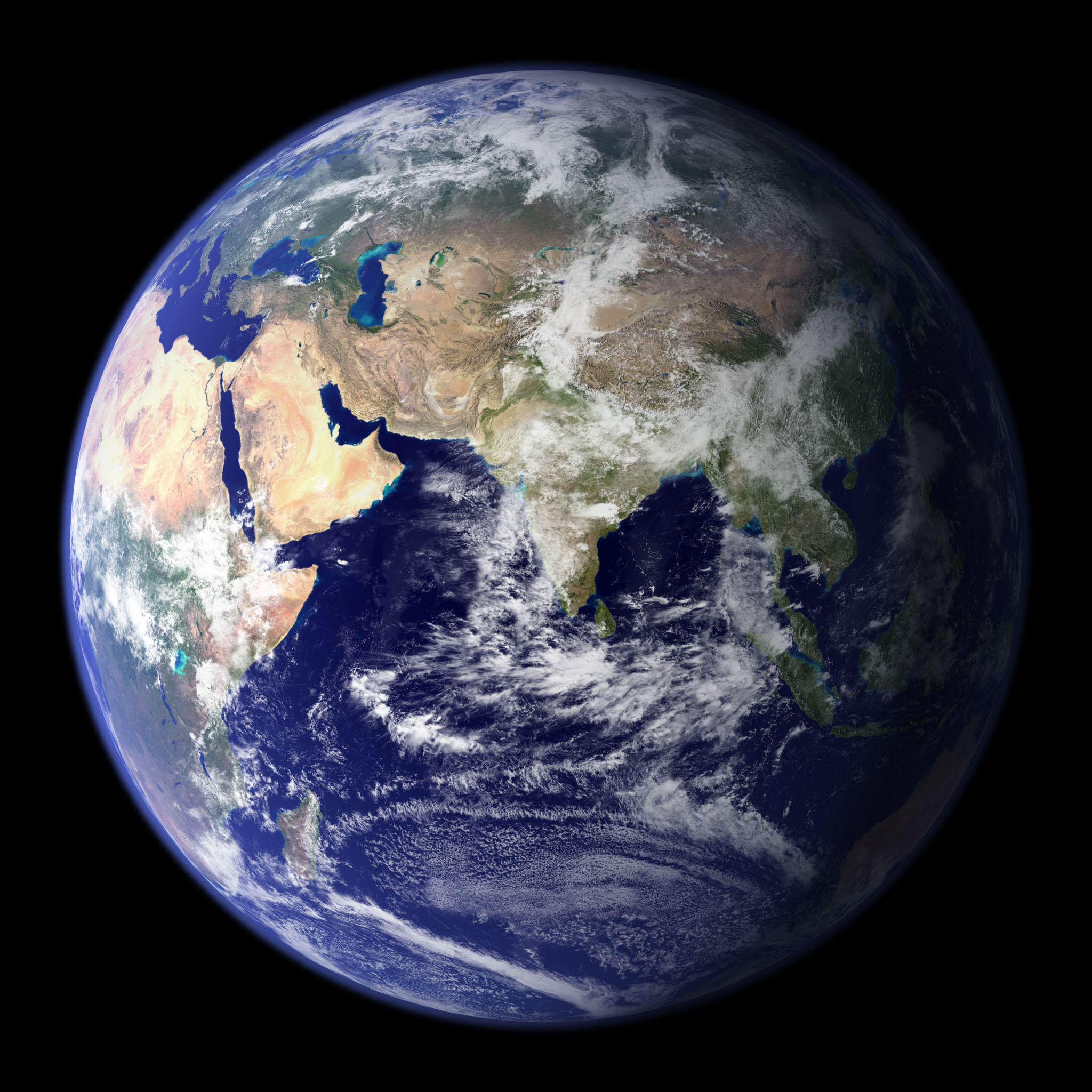
It's interesting that conspiracy comes from just about anything these days. Yes, there are UFO's, some of which are most definitely not of this world or are very mysterious. However, the end? Here's information regarding the UFO that is to crash into the Indian Ocean on Friday the 13th. "MYSTERY OBJECT TO HIT EARTH ON FRIDAY THE 13TH:A piece of space junk named "WT1190F" is going to hit Earth on Nov. 13th (0620UT). It will burn up in the atmosphere off the coast of Sri Lanka, with some debris possibly reaching the water's surface. According to the European Space Agency, "its mass is not sufficient to cause any threat to the area, but the show will still be spectacular, since for a few seconds the object will become quite bright in the noon sky." Astrophysicist Jonathan McDowell told Nature that "the object is only 1 to 2 metres in size, and its trajectory shows that it has a low density, and is perhaps hollow. That suggests an artificial object, 'a lost piece of space history that's come back to haunt us." At the moment, suspicions are focused on old Moon missions. For instance, it could be a spent rocket stage or lunar module from the Apollo program. Perhaps the impact itself will provide some clues. Stay tuned!" UFO to crash into the Indian Ocean on November 13: Is it the end? "Here is all you should definitely know about it:
The object is set to crash in the Indian Ocean, around 65 kilometres off the south of Sri Lanka
It is up to 7 feet long. According to the scientists, it could also be a piece of rocket from a recent lunar mission, or a part of an Apollo program spacecraft that has been into the space for over 40 years, or even a piece of Saturn V rocket which enabled man to walk on the moon, which was reported orbiting Earth in 2002
The contact of this object with the surface of the Earth will be a rare opportunity to observe its impact
The object was rediscovered by astronomers at the Catalina Sky Survey, earlier in October
Astronomers at the European Space Agency (ESA) are now monitoring the space junk's journey
The agency said that WT1190F 'poses very little risk to anyone'
Its collision will also help scientists improve the understanding of how space objects, man-made or natural, interacts with Earth's atmosphere
Researchers also say that the object's movement suggests that it is hollow inside."
"Despite claiming to see a UFO/drone, no concrete evidence was discovered to support the claims. Officers of the Intelligence Bureau, Bureau for Civil Aviation Security (BCAS), Delhi Police, and the Central Industrial Security Force (CISF) met to discuss the event and the IAF has been advised to keep strict vigil. It is interesting to note that the Delhi Police has prohibited the use of any laser beams or similar objects, by an individual or group, in and around the IGI airport. If eye-witness incidents are to be believed, this is a direct violation of the law. But the more important question is about the origins of these flying objects and laser beams. Some mysterious space junk, dubbed a UFO, is about to crash into the Indian Ocean on November 13, 2015. But the sightings at IGI were no ordinary space debris. It will be naive of us to dismiss this as an act of mischief. But to fuel theories regarding UFO sightings will only please the conspiracy camp, and upset the other lot."
"The mystery metallic object is expected to crash into the sea on Friday, November 13, which is the third Friday 13 this year.
The high number of Friday 13s this year - there was one in 2014 and just one next year - has sent some religious conspiracy theorists into overdrive.
They claim, while the impact may not lead to the end of the world itself, it could be a sign before the "Second Coming of Christ and Judgement Day."
Although astronomers have yet to identify the source of the mystery space debris, it is believed to have been part of something we once sent into space which has come back to haunt us."
A pair of massive earthquakes that rocked the Indian Ocean on 11 April 2012 may signal the latest step in the formation of a new plate boundary within Earth’s surface.
Geological stresses rending the Indo-Australian plate apart are likely to have caused the magnitude-8.6 and magnitude-8.2 quakes, which broke along numerous faults and unleashed aftershocks for 6 days afterwards, according to three papers published online today in Nature1–3.
Seismologists have suspected since the 1980s4that the Indo-Australian plate may be breaking up. But the 11 April earthquakes represent “the most spectacular example” of that process in action, says Matthias Delescluse, a geophysicist at the Ecole Normale Supérieure in Paris and lead author of the first paper1. Worldwide, “it’s the clearest example of newly formed plate boundaries,” he says.
According to prevailing theories of plate tectonics, the Indo-Australian plate began to deform internally about 10 million years ago. As the plate moved northwards, the region near India crunched against the Eurasian plate, thrusting the Himalayas up and slowing India down. Most scientists think that the Australian portion forged ahead, creating twisting tensions that are splitting the plate apart in the Indian Ocean.
Delescluse and his team inferred the presence of these seismic stresses by modelling stress changes from shortly before the 2012 earthquakes. They found that two earlier earthquakes along the eastern plate boundary — the magnitude-9.1 tremor in 2004 that unleashed a massive tsunami across the Indian Ocean, and another quake in 2005 — probably triggered the 2012 event by adding to pent-up stresses in the plate’s middle region.
Gregory Beroza, a seismologist at Stanford University in Palo Alto, California, says that the model is a likely explanation. “The 2004 and 2005 earthquakes by themselves would not have caused this other earthquake. There had to be other stresses,” he says.
At least four faults within the Indo-Australian plate ruptured simultaneously in April 2012, resulting in two magnitude-8 earthquakes within two hours. (Red stars indicate the epicentres.)
KEITH KOPER, UNIVERSITY OF UTAH SEISMOGRAPH STATIONS
You may not have felt it, but the whole world shuddered on 11 April, as Earth’s crust began the difficult process of breaking a tectonic plate. When two huge earthquakes ripped through the floor of the Indian Ocean, they triggered large aftershocks on faults the world over, and provided the best evidence yet that the vast Indo-Australian plate is being torn in two.
Geologists have spent five months puzzling over the twin quakes - of magnitude 8.6 and 8.2 – which took place off the coast of North Sumatra. Events that large normally occur at the boundary between tectonic plates, where one chunk of Earth’s crust slides beneath another, but these were more than 100 kilometres from such a subduction zone. What’s more, both involved rocks grinding past each other sideways with very little vertical movement – what geologists call strike-slip earthquakes. Yet strike-slip quakes this large had never been reported before.
Matthias Delescluse at the École Normale Supérieure in Paris, France, and his colleagues have an explanation. They analysed quakes in the area since December 2004, when a magnitude-9.1 quake in a subduction zone near Sumatra triggered a devastating tsunami. They found earthquakes during this period were nearly 10 times more frequent compared with the previous eight years. What’s more, 26 of the quakes that happened between December 2004 and April 2011 were similar to the 11 April quakes in that they involved rocks being pushed and pulled in the same directions. Taken together, the events suggest that the Indo-Australian plate is breaking up along a new plate boundary, say the researchers, and that may account for both the location and the size of April’s quakes . Although both are currently on the same plate, Australia is moving faster than India. This is causing a broad area in the centre of the Indo-Australian plate to buckle. As a result, the plate may be splitting (see map).
John McCloskey at the University of Ulster in Coleraine, UK, is not yet convinced, saying the evidence from the April events is still too weak to support such a bold claim. But Lingsen Meng at the University of California, Berkeley, who studied the rupture pattern of the larger 11 April quake, is more confident. “I think it’s a fair argument that the 11 April earthquakes may mark the birth of a plate boundary,” he says. Things should become clearer as more earthquakes shake the region.
If they are anything like the 11 April events, the rest of the world may shake too. In another new study, Fred Pollitz at the US Geological Survey in Menlo Park, California, and his colleagues found that the global rate of quakes with a magnitude of 5.5 or greater increased almost fivefold in the six days after 11 April – something that has never been seen before, even after very large earthquakes .
“This was the most powerful event (ever recorded) in terms of putting stress on other fault zones around the world,” Pollitz says.
Earthquakes of at least M5.0 for the week ending 9 October 2012 – Image courtesy of USGS
The 240 recorded earthquakes of at least magnitude 2.5 shown on the USGS real time earthquake map for the week 3-9 October showed the expected pattern with the majority of tremors (including all greater than or equal to M5.0) occurring along the boundaries of the earth’s tectonic plates, and a scattering of smaller events occurring within plates in more stable areas (including tremors of M3.0 in Oklahoma and M2.5 in eastern Canada).
Mid Ocean Ridge Earthquakes
The map shows a trio of tremors (two of M5.5 and one M5.7) occurring in the central Atlantic Ocean, along the ridge which forms the axis of the ocean where the African and American plates are moving apart and new ocean crust is being created. Such events, though by no means uncommon, are fewer in number and smaller in magnitude than those at transform or convergent plate boundaries.
At ocean ridges, plate movement is largely extensional, although “all types of faulting styles are observed,” according to Bergman and Solomon’s 1984 article,Source mechanisms of earthquakes near mid-ocean ridges from body waveform inversion: Implications for the early evolution of oceanic lithosphere.
Transform faults offset mid ocean ridges -Image courtesy of Pimvantend-
Because the structure of ocean ridges includes fault segmentation, with each length of the ridge being offset by lateral (transform) faults, earthquakes are an expected feature of the process. Without detailed knowledge of the local tectonics of the three earthquakes it’s impossible to say exactly which type of faulting was responsible, although their location (a few kilometres from the ridge itself) suggests that they may have been generated by movement along these transform faults.
Plate tectonics is one of the most successful theories in the history of science. Beyond its scientific successes, it's widely accepted by the public, since it explains a lot about the world that we see around us.
But like other successful theories, it has its share of awkward inconsistencies. A recent paper in theJournal of Geophysical Research attempted to tackle one of these inconsistencies—finding an absolute reference frame for the movement of the plates—but failed so badly that its authors advise other scientists not to even bother trying. But as part of their failure, they came up with a new measure of one of the more unexpected consequences of plate tectonics.
All of plate tectonics is driven by density differences in the material beneath our planet's solid surface. These drive the shifting plates, power hot-spot volcanoes, and recycle material to the planet's surface. They also make sure that the mass of the Earth is never evenly distributed. As that mass shifts internally, it actually causes the Earth's spin to wobble around a bit. As a result, even the Earth's axis of rotation doesn't provide an absolute reference frame. In the process of failing to find an absolute reference frame, though, the authors have provided a detailed map of how the Earth's true pole has wandered over millions of years.
Making the numbers add up
One of the larger successes of plate tectonics is that it offers an explanation for island chains. Groups of volcanic islands, like the Hawaiian islands, can trace straight lines for thousands of miles if one considers the largely submerged remains of former islands. Plate tectonics offers an explanation: there are stationary hot spots in the mantle that drive volcanic eruptions. The plates simply slide over a hot spot, which builds volcanoes that later become inactive and erode as they slide past.
This process is so regular that it's one of the ways that scientists have tracked past plate motion. For the Hawaiian chain, it's even possible to see a sudden left turn, as the Pacific plate changed its direction of motion. These measurements tend to line up well with others based on measurements made at the boundary of plates.
So, stationary hot spots, moving plates. That would make hot spots a great reference frame for plate movement. Just pick absolute locations for the hot spots, then you could track the entire planet's plates as they slid across them. Just one small problem: it doesn't work. "It was soon realized," the authors write, "that a reference frame defined by fixed hot spots from the Pacific Ocean could not adequately reproduce hot spot tracks in the Indian and Atlantic Ocean."
In other words, although a hot spot appears to be a fixed reference frame for a given plate and its neighbors, our best data indicates that different hot spots appear to be moving relative to each other.
But our best data is an ever-changing thing, and the authors decided it was time for another try. They went through the literature and pulled out any information they could find about rates and directions of plate motion, and integrated it all into a single model. Despite several iterations that made for a progressively better fit to the data from individual hotspots, there was no way to get things to work out globally. "Our attempts to define a global fixed hot spot reference frame have failed to produce acceptable fits to the segments of hot spot tracks formed from Late Cretaceous to Paleogene time (80–50 Ma [million years])," the authors concede.
Their conclusion? It's time to give up on the idea of hot spots being fixed. If we're ever going to have an absolute reference frame, it's not going to come from hot spots.
Shifting references on an unstable Earth
Based on the paper, though, it's hard to tell what else might provide an absolute reference. The authors' work provides further evidence that the entire surface of the Earth (the lithosphere) is moving relative to its interior, the mantle. In other words, the surface of the Earth is not completely coupled to the core, something that had previously been suggested to be the case for Saturn's moon Titan. In the case of Earth, the so-called "lithosphere rotation" involves a slow drift westward, shifting about a tenth of a degree every million years on average. However, the rate isn't even, and has been nearly three times that at some point in the past, apparently at the time when the Indian plate was accelerating toward Asia.
It isn't just that we lack a fixed reference frame to track the plates. It's that plate tectonics itself shifts such enormous masses around that these skew the reference frame.
As it turns out, this also wipes out another potential reference frame, the axis of the Earth's rotation. If the Earth were a uniform, solid sphere, its axis of rotation would remain stable. But the whole idea behind plate tectonics is that the mass isn't distributed evenly. The hot spots at issue here push to the surface of the crust precisely because they're hotter and thus less dense than the surrounding material. On larger scales, it's this density-driven convection that powers the shifting of the continents themselves. As crust is driven into the Earth's interior at subduction zones, it places sheets of solid material deep under the crust that take millions of years to come to equilibrium with their new surroundings.
So, not only is the Earth not uniform, but its internal differences are constantly shifting around. All of which feeds back into the dynamics of its rotation, leading to a phenomenon called "true polar wander"—its axis of rotation hasn't always run through the sites of the current North and South Poles. In fact, during the period from 90 million to 40 million years ago, the poles drifted nearly 10 degrees and then snapped back.
Technicalities and the big picture
The paper itself is long, dry, and very technical; it's not the sort of thing that I'd recommend anyone read unless they're actively working in this field. But the ideas within it are important and compelling.
One important idea is that even our most successful scientific theories are filled with enough discrepancies and inconsistencies to keep scientists gainfully employed for generations. But it's important to keep these in perspective. Not knowing something, or even getting it wrong, doesn't mean that we don't know anything, or that every little inconsistency means we should throw the entire structure out.
The story of plate tectonics itself highlights how oddities on their own aren't enough to overthrow a dominant idea. Instead, you have to come up with something that explains not only the discrepancies, but everything else that the dominant idea gets right. Even then, it's not easy, something that is very clear from the reception that plate tectonics got when it was first suggested almost precisely 100 years ago.
One of the reasons that many people have a hard time accepting some aspects of science is that these ideas make them feel uncomfortable. Plate tectonics doesn't have the same emotional impact as the Copernican revolution, which told us that our place in the Universe wasn't special. But it does tell us that our place wasn't even a place for most of its history: continents shift, islands grow and vanish, and there are apparently no fixed frames of reference.
Without the energy brought to the Earth's surface by plate tectonics, however, it's not even clear that life itself would have been able to flourish, and it certainly wouldn't have evolved the way it has without the changing climates and landscapes.
Giving up a fixed frame of reference to have all that seems like a worthwhile tradeoff.
Two April earthquakes (red stars) off the coast of Sumatra are indicators of the ongoing breakup of the Indo-Australian tectonic plate. Over millions of years, the split will put India and Australia on different courses.
Keith Koper
Two giant earthquakes in the eastern Indian Ocean have shown geologists that breaking up is easy to do — for tectonic plates, that is.
The pair of quakes hit on April 11, startling seismologists with their size (magnitudes 8.6 and 8.2) and location (hundreds of kilometers from the active zone that spawned the deadly 2004 magnitude 9.1 earthquake and tsunami). Now, three studies reveal that the April quakes were an indication that one great slab of Earth’s crust is slowly fracturing into two.
The work, reported online September 26 inNature, confirms that seismic risk remains high in the area.
“You’d be nuts to think it was all over in offshore Sumatra,” says Kerry Sieh, a seismologist at the Earth Observatory of Singapore who was not involved in the new research.
The bigger April quake leapt straight into the record books. It was the largest earthquake ever recorded in the middle of a tectonic plate, rather than at a plate’s edges where most quakes happen. It was also the largest earthquake recorded along a strike-slip fault, in which two chunks of Earth’s crust slide past each other horizontally, like along California’s San Andreas. And it was the most complex strike-slip rupture ever seen, breaking along at least four separate faults interlaced like a geological lattice.
Add together the 2004 killer Sumatra quake, two nearby great quakes in 2005 and 2007, and these April Indian Ocean quakes, says Sieh, and “you get the greatest release of seismic energy anywhere on Earth in the past half-century.”
Blame it on the massive Indo-Australian crustal plate, which stretches from the Himalayas in the north to well below Australia in the south. You can think of the plate like a motorcycle with a sidecar, says Matthias Delescluse, a marine geophysicist at the École Normale Supérieure in Paris. The motorcycle — the part of the plate carrying Australia — is driving quickly northeast beneath Indonesia. But the sidecar — the part carrying India — is slamming into a geological wall of the Himalayas. The motorbike and sidecar are thus shearing apart. Millions of years from now, the Indo-Australian plate will split into an Indian and an Australian plate.
April’s quakes reminded scientists that this is happening, maybe even faster than once thought. The 2004 quake, to the east, sped up the rate of earthquakes across the region and probably hastened the April quakes, Delescluse and his colleagues report in Nature. They calculated how the monster 2004 and 2005 quakes changed stress patterns in the Earth’s crust, and found that releasing stress on the faults diving under Sumatra to the northeast actually raised stress in the strike-slip faults to the southwest, in the Indian Ocean.
In a second Nature paper, seismic records illuminate the complex way the seafloor ruptured in April.
The first April 11 quake unzipped four perpendicular faults one after another in less than two minutes, the scientists found. Each fault ruptured with the equivalent energy of at least a magnitude 8.0 quake in that event. Two hours later, the magnitude 8.2 aftershock struck just south of the main rupture. “This was a gee-whiz event for us,” says team member Thorne Lay, a seismologist at the University of California, Santa Cruz.
But the story wasn’t over once the two quakes were done. They continued to resonate around the globe, triggering big aftershocks as far away as Mexico, a third study finds.
Fred Pollitz, a seismologist at the U.S. Geological Survey in Menlo Park, Calif., became interested in the quakes when his colleagues’ pagers kept going off for days afterward with alerts of other big quakes. “That struck me as rather suspicious,” Pollitz says. So he and his colleagues went through catalogs of global earthquakes, looking for changes in patterns of seismicity.
They found that the number of quakes of magnitude 5.5 or greater, located more than 1,500 kilometers from the April 11 quakes, went up nearly fivefold for six days afterward. The biggest such quake was a magnitude 7 in Baja California, about 22 hours afterward.
Most giant quakes don’t trigger temblors so far away — or if they do, the triggered quakes are well below magnitude 5. The difference, Pollitz says, lay in the strike-slip nature of the April 11 quakes. This type of fault geometry allows the stress of a crustal movement to propagate much farther across the planet’s surface, compared with deep-diving plates that transmit their energy into the bowels of the Earth. The quick rupture also allowed seismic wave energy to travel out in pulses that “we believe shook up the faults more efficiently,” Pollitz says.
Though the strike-slip geometry may have triggered other quakes, it also meant that only a few people died in the April 11 events. Horizontal ground movements don’t push the ocean water around in ways that generate a deadly tsunami, like the one that killed a quarter of a million people in 2004.
Still, the seismic risk around Sumatra remains high, because other parts of the plate diving beneath Indonesia have not broken for some time. And the fact that big earthquakes can pop off where they’re not expected, like along strike-slip faults in the east Indian Ocean, suggests to researchers that other surprises lie in store.
Back Story | How the plates break up
Geoatlas/Graphi-Ogre, adapted by E. Feliciano
As geologists’ defining theory of the processes that shape the face of the planet, plate tectonics is rock solid. Yet there’s no clear definition on exactly what constitutes a tectonic plate or how many plates there are. At its most basic, a tectonic plate is a chunk of Earth’s outer surface (its crust and a portion of the upper mantle) that moves as a single entity. Where plates meet, they grind against or dive beneath one another.
Seven huge plates dominate the plate tectonic scene. At least eight smaller plates show up on most maps, mostly on the margins of oceans where Earth’s crust is thinner and more prone to fracture. But some of these plates, big and small, are in the process of breaking up (see main story), and in a few cases may have already done so. Several scientists argue that the Indo-Australian plate, which is the third largest plate and is in the midst of a drawn-out breakup, has already shed one fragment, a smaller plate dubbed Capricorn, on its southwest edge. Global-positioning satellite data show that the southwest part of the larger plate is not moving in exactly the same direction as the northwest and east. That, some geologists argue, suggests that Capricorn has already broken away.
Monday, April 16, 2012 at 10:17:49 AM at epicenter
169 km (105 miles) NNW of Kendari, Sulawesi, Indonesia 186 km (115 miles) ENE of Palopo, Sulawesi, Indonesia 1474 km (915 miles) NW of DARWIN, Northern Territory, Australia 1711 km (1063 miles) ENE of JAKARTA, Java, Indonesia
Magnitude 4.8 - SUNDA STRAIT, INDONESIA
Monday, April 16, 2012 at 07:37:29 UTC
Monday, April 16, 2012 at 02:37:29 PM at epicenter
120 km (74 miles) SW of Cilegon, Java, Indonesia 151 km (93 miles) S of T.-Telukbetung, Sumatra, Indonesia 177 km (109 miles) W of Sukabumi, Java, Indonesia 181 km (112 miles) WSW of JAKARTA, Java, Indonesia
Magnitude 5.0 - GULF OF CALIFORNIA
Monday, April 16, 2012 at 03:27:42 UTC
Sunday, April 15, 2012 at 09:27:42 PM at epicenter
152 km (94 miles) E of La Paz, Baja California Sur, Mexico 164 km (101 miles) WSW of Culiacan, Sinaloa, Mexico 1084 km (673 miles) SSE of PHOENIX, Arizona 1123 km (697 miles) WNW of MEXICO CITY, D.F., Mexico
Magnitude 4.1 - GULF OF CALIFORNIA
Monday, April 16, 2012 at 10:23:25 UTC
Monday, April 16, 2012 at 03:23:25 AM at epicenter
143 km (88 miles) NE of Guerrero Negro, Baja Calif. Sur, Mexico 173 km (107 miles) NNW of Santa Rosalia, Baja Calif. Sur, Mexico 201 km (124 miles) W of Hermosillo, Sonora, Mexico 525 km (326 miles) S of PHOENIX, Arizona
................................END OF UPDATE.............................
THIS IS AN UPDATE ON THE ROCKIN' AND ROLLIN' GOING ON
end update--------------------------------------
This is just the picture of the earthquake activity that has gone on in the past day in the United States. Bare with me as I list the latest below the picture and then there will be more information.
A magnitude-6.9 earthquake shook Baja California early Thursday morning, the U.S. Geological Survey reported, but no tsunami was expected to strike California or elsewhere. The earthquake, which occurred at 12:15 a.m., was centered about 360 miles southeast of San Diego, on the western edge of the Gulf of California. A smaller quake, a magnitude-6.2, shook the same area of Mexico at 12:06 a.m. The perceived shaking was described as "very strong" close to the epicenter, according to the U.S. Geological Survey.
4 major earthquakes strike along West Coast, Mexico in last day
April 12, 2012 | 6:31 am
The West Coast of the United States and Mexico have been hit by a series of powerful earthquakes in the last day. The latest was a magnitude 6.9 earthquake that shook Baja California early Thursday morning, the U.S. Geological Survey reported.
The earthquake, which occurred at 12:15 a.m., was centered about 360 miles southeast of San Diego, on the western edge of the Gulf of California. A smaller quake, a magnitude 6.2, shook the same area at 12:06 a.m. On Wednesday afternoon, a magnitude 5.9 earthquake struck in the Pacific Ocean about 160 miles west of the coast of Oregon, the U.S Geological Survey said, but no tsunami developed.
The Oregon earthquake, which occurred at 3:42 p.m., appeared to be centered near where seismic plates intersect. A second, much larger quake, registering 7.0, was felt near Michoacán, Mexico, a few minutes later.
None of the quakes caused significant damage or injuries, and no tsunami warnings were issued. 6.9 quake shakes Baja California, but no tsunami expected.
News: No injuries reported in second west Mexico quake
AFP
Reuters - 5 hours ago
The magnitude 6.9 quake off the Baja Californiapeninsula in northwest Mexico struck early on Thursday morning in a sparsely populated region, and Alfredo Escobedo, head of emergency services in Baja California state, said no damage ...
News: No injuries reported in second west Mexico quake
AFP
Reuters - 5 hours ago
The magnitude 6.9 quake off the Baja Californiapeninsula in northwest Mexico struck early on Thursday morning in a sparsely populated region, and Alfredo Escobedo, head of emergency services in Baja California state, said no damage ...
FROM THE FOLLOWING VIDEO POSTER: Published on Apr 12, 2012 by dutchsinse To say we are currently under a global state of unrest is putting things MILDLY
This is the time to be on HIGH preparedness alert !
Two large 6.9M and 6.2M earthquake have now struck southern california...
That is on TOP of the 8.9M, 8.7M, 8.2M, 6.0M in sumatra.. on TOP of the 7.0M in Mexico.. on TOP of the 6.0M off the coast of Oregon... on TOP of the 6.1M in Japan... on TOP of the 4.5 off the EAST COAST new england.. on TOP of the 4.8 in south Utah... all in less than 24 hours !
Not counting tornadoes in Puerto Rico, or FOUR FEET OF HAIL in texas !
needless to say.. be on the watch and be prepared... food, water, shelter, transportation, communications, and self defense --- these basic needs MUST be met in order for anyone to survive for longer than a few days.
---------------end update-----------------
Here's the rundown on today's amazing amount of quakes in the Sumatra area...
THIS IS A MIX OF THE USGS, EMSC AND LIVE REACTION TO THE QUAKES
EMSC
Off W Coast Of Northern Sumatra
Apr 11 10:43 AM
8.0
10.0
USGS
Off The West Coast Of Northern Sumatra
Apr 11 10:43 AM
8.2
16.4
banda aceh - hard too remain standing, iMac in the office hopping madly all over the desk, people panicking and leaving the city because of tsunami warnings
GEOFON
Off West Coast Of Northern Sumatra
Apr 11 10:43 AM
8.0
10.0
(I skipped down to the next "red" area on the list)
EMSC
Off W Coast Of Northern Sumatra
Apr 11 09:48 AM
6.2
5.0
GEOFON
Off West Coast Of Northern Sumatra
Apr 11 09:48 AM
5.5
10.0
EMSC
North Indian Ocean
Apr 11 09:27 AM
6.3
10.0
Chennai - That was awesome and scary!! first my friend sitting next to me told that the floor shaked, i did not believe him. but just after 10 seconds, i felt it myself i was moving front and back for 5 seconds. then all of us started running to the open ground
GEOFON
North Indian Ocean
Apr 11 09:27 AM
5.9
10.0
USGS
North Indian Ocean
Apr 11 09:27 AM
6.0
9.8
EMSC
North Indian Ocean
Apr 11 09:00 AM
5.8
10.0
GEOFON
Off West Coast Of Northern Sumatra
Apr 11 09:00 AM
6.4
10.0
USGS
Off The West Coast Of Northern Sumatra
Apr 11 08:38 AM
8.6
22.9
penang - Shaking felt and the signboard shakes moderately.People moved to the streets.
GEOFON
Off West Coast Of Northern Sumatra
Apr 11 08:38 AM
8.6
10.0
Belfort - ressenti plusieurs ondes de cisaillement laterales
malaysia penang - feel like shake about 1 minutes
Phuket, Thailand - Felt a few minutes of very weak ground shaking at approx 3.40pm Thailand time
Penang - We were sitting at the dining table and thought one of us was shaking our legs until we realised the table and floor were moving backwards and forwards. First time we have felt this kind of movement on the ground floor.
penang malaysia - Minor shaking or tremors to the point some feel slight dizziness
Cyberjaya, Malaysia - Working on the forth floor building, multiple co-worker felt the mild shaking.
Selayang, Selagor, Malaysia - very scaryy!!!! hospital shaking!!
MALAYSIA - In PJ Malaysia
Penang, Malaysia - Could feel the house walls moving, tables moving but no damage.
phuket - Moderate shaking indicated
Penang, malaysia - My computer chair was rocking heavily. I thought it was my dog, but it was an earthquake as I could see by the floor lamps swinging.
Langkawi, Malaysia - Was at home in a two story house and felt a moderate shake
kuala lumpur malaysia - felt it in my 23 story apartment building
Shah alam, Malaysia - I felt shaking in here at 16:54 pm.
COlombo, Sri Lanka - Felt a light & weak shake here in sri lanka, which lasted around 2-3 seconds & went off.
Alor setar - Rasa seperti kepeningan
Alor Star, kedah, malaysia - the computer screen is shaking
Phuket - shelf at supermarket is shaking...
Penang, Malaysia - Very weak but most people feel it a few minutes ago...
HO CHI MINH CITY - Could feel building moving at 20th floor
Penang, Malaysia - Weak shaking, lasted for couple of minutes
Penang - My computer monitor was shaking weakly
Petaling Jaya, Malaysia - Felt side to side swaying.
Petaling Jaya - can be feel at 2nd floor
Singapore - I am in a building in Singapore on the 17th floor and was able to feel the building shaking for about 30 seconds
cyberjaya - i felt feel dissy ready after the shacking
Singapore - Can feel the building on 16th floor of condo shaking at 16:45 local time....
penang - the table are shaking, i felt dizzy
Ho Chi Minh City, Vietnam - Very long, rolling earthquake - must have lasted at least 1 minute, 30 seconds.
Bukit Mertajam Malaysia - Local time between 4.40-4.50pm
Lunas, Kulim, Kedah - Felt sofa I was sitting on shaking.
Alor Setar Kedah Malaysia - This is the second time I felt the quake.. the first time (2009?) that cause massive tsunami in Banda Aceh Sumatra Indonesia.
Singapore - In office, could feel the building shaking slowly.
Ipoh Malaysia - I felt my bed shake and some of my hanging decorations move a few times.
Mid Valley, Kuala Lumpur - Felt a moderate shaking here at Mid Valley North Point Office.
Langkawi - In hotel chalet and it shook on its stilts, quite unnerving....
Penang, Malaysia - Free standing bookshelf was swaying for a few minutes.
Penang, Malaysia - Last for about 30 seconds...
Colombo Sri Lanka - Felt the Earth quake in 6th floor Colombo 07 Sri Lanka.
Bandar Utama, Petaling Jaya, Selangor - I was sitting on my chair at my working desk and i felt myself shaking, i wonder why i was shaking and i saw wire outside the window shake and realize the earth was shaking.
Phuket - Weak shaking lasted for several minutes in Phuket.
Ampang, Selangor, Malaysia - I was lying on my bed, when I felt some tremors. I stopped typing and laid straight, and tried to stop breathing, and I felt my body slightly swaying. I'm on the 2nd floor, and I live in the Klang Valley.
Taman Desa, KL - Felt the shaking at 11th Floor..everything is shaking
Kulim Kedah - Sitting on sofa feel shaking, hear gril door sound and big giant (car) shaking.
Pulau Pinang, Malaysia - I was sleeping already can feel the tremors. Our house with strong shaking.
penang - around 1 minute, in penang, kl..
MALAYSIA - We could see the hanging CCTV at Tesco Tg Pinang swinging just now. =.='
Bangalore - Slight shaking of 8 floor building.
Singapore - I was in the office when I felt the ground swaying. I thought I was giddy but apparently not as most of mt colleagues felt it too.
Nuwara Eliya,Sri Lanka - I even fell it shaking a light bit in nuwar eliya,,that is the highest part in sri lanka and very far from the earthquake source...
Petaling Jaya - very strong shaking.
Delhi, India - Delhi rocked too ...Sitting on the 6th floor of our office in Noida...V all felt the tremor..just came back from evacuation.
Kochi - Felt a slight shake in 6th floor.
bangalore - 14.15 hours felt my chair sliding back at my 7th floor of my office at MG Road. rocked for over 20 seconds and second set of movement felt again. whole office evacuated in MG Road
Bangalore - We felt that but no affects
Chennai - In L&T, We felt small shake, chairs were moved, My mom called and informed she also felt same in her office Nungambakkam. Mild shakes over the area of OMR, Egmore, Guindy and DLF. We all went down to assembly point. Now back to our seat.
Banalore - WTC was shaking sligtly @ 2:20 PM
Bhubaneswar, Odisha - I could feel my office desk shaking for about 1 or 2 mins. all colleagues stood up in surprise and were guided to safe assembly soon.
Chennai - In L&T, We felt small shake, chairs were moved, My mom called and informed she also felt same in her office Nungambakkam. Mild shakes over the area of OMR, Egmore, Guindy and DLF. We all went down to assembly point. Now back to our seat.
banglore - the chair was shaking , so were the glass panes.
Darwin NT - We felt jack shit, really. Thought it was my wife on the toilet. Man.................
bukit mertajam - chait and table shaking
Melaka - Felt shaking of chair and objects on work desk on 9th floor. Others at ground level report no shaking noticed.
Kuala Lumpur - i was on the 15th floor of an apartment, tremors were felt for more than 20 seconds...
Cyberjaya - I felt the tremor and dismissed it thinking it was just me feeling giddy. But when i turned and looked at a water bottle on a table some distance away, the water level was like i knocked into it.
Alor Setar, Kedah - I thought I was going to faint at first, but then I saw the water surface moving and my family and I ran outside. It was my first time experiencing an earthquake.
Singapore - Only one of my lady colleague and me felt the shaking. Eventho' the shaking is weak but, still scary.
Singapore - Might be an aftershock, We could feel the vibration. Shaking a bit. Scary, but didnt affect much
Puchong, Malaysia - My car stopped at traffic lights and I can feel my car was shaking..
Kulim Hi Tech Park, Kulim, Kedah, Malays - I was on the 1st floor. I felt dizzy. Sensed the tremor twice. Evacuated the building.
Penang - At first I thought it was some heavy trailer that passes the highway, but when the shaking didn't stop, only realized it is an earthquake. I decided to leave my work place after the shaking stops.
Annanagar - My father has experienced some chair and kitchen utensils movement
BANGALORE - Chair n desktop table was shaking..for once thought that my head was reeling n clenched my feet hard to floor... FIRE EXIT board started swaying..which confirmed that it is earthquake itself n its happening right then at that moment...all of us ran via stairs to open area..from 7th floor to ground...!!
Nibong Tebal, Penang - Coul feel my whole house shaking. Neighbours even went out of house.
Dhaka - I was at 18th floor. Feels like i am on a cradle
Kolkata - my revolving chair shaking lightly, i guess some incident & out my office quickly
Shah Alam, Malaysia - i live on the 11th floor .was lyin in bed ,felt dizzy n felt my leg moving slowly. thought it was cause i skipped a meal. then i saw the water in my glass moving .scared me !
Seri Iskandar - not so bad. but still shaking. TWICE!
Kuching, Sarawak - My sofa and my chair was shaking when quake happen!
Malaysia - I was on 36th floor of our condo buildng i felt some weak shaking
Chennai - Suddenly chair was shaking in my 8th flr office and i initially thought chair has got broken somewhere. Then realized it is earthquake
Penang,batu feringgi - I was laying on a sun lounge and thought someone behind me was shaking the lounge
Kuala Lumpur Happy Garden - Felt dizzy in front of computer and my aquarium water is heaving up and down...fan swaying to and fro
medan - 1st earthquake, i felt like earth swing me about 10 min. but for 2nd, i just feel weak shaking. but i'm worrying about tsunami. is there possible of tsunami? exact explain.
Chennai, India - Felt again for the second time
Ipoh - I was on the toilet bowl and feel dizzy
Koramangala, Bangalore - Chairs, Tables, Glass panes, felt like the whole building shook repeatedly... around 14.15 and again around 16.15!
Bangalore - At about 14:20 and 16:30. Felt a light rocking. Water in bottle shaking. 2nd floor of building. People on ground floor felt nothing.
Bangalore,ITPL - Felt from the 9th floor building of Technicolor (itpl) by around 2.10pm
Nungambakkam, Chennai, India - Sofas were sharing and chairs were moved. Most offices closed.
Gurun - 1st time i felt it in Gurun , Kedah which is totally far away from sea. It happened 2-3minutes around 4.50pm malaysia time.
MALAYSIA - I felt shaking on 5th floor bangsar south city
Taman Meru Impiana, Ipoh - At the fourth floor .First experience , lasted about 2 mins. Very scary
Pallavaram Chennai - I was in front of my laptop and I felt the whole cabin was shaking for about 15-20 seconds if i am not wrong,as if siting on a vibrating/massaging chair.even my husband,father,my neibhours felt the same(places like Kilpauk,Royapuram,Tondiarpet).This is my second experience,earlier it was Dec 24 2006 Tsunami.
bangalore - felt moderate tremors each after a span of an hour..hope there would not be a third one
Kodambakkam, Chennai - My ceiling fan was wobbling. String of calls followed people asking, if something was wrong.
Noida - It was there is sec 135 Noida as well. Felt a little shaking, and window movement in TCS office
Kolkata - The desk and the chair started shaking..Felt a little bit dizzy during the tremor..
taiping, perak, malaysia - sahking experienced in aulong, taiping
srilanka - when i was useing laptop i felt one shake so i got scard so mom said not make fun.
Visakhapatnam, India - I was relaxing on the floor in my 5th floor apartment. When my body was shaking, I thought my blood pressure was high. And it continued with change of position also, then I realized that it is an earthquake. It went on for nearly 3-4 mins.
Level 13, Menara Weld, Kuala Lumpur - my glass on my table moved for few milimeters...
kuala lumpur - initially i thought it was the stereo speaker vibration, but stopped the music for a while and the chair & table - actually the whole building - was still shacking without interruption like "trrrrrrrrrrrrrrrrr!!!!" more than 4 minutes!!! I survive an 8.6! thank u thank u
USGS
Off The West Coast Of Northern Sumatra
Apr 11 08:38 AM
8.9
33.0
singapiee - i was at my fren house at the evening wen my fren mother was asking me whater i fell something shakeing but it was not to stong hope noyhing big going to happen lets pray to god
Location of the aftershocks until 15:41 UTC - red blocks are the lastest ones, block with the white arrow in it is the location of the epicenter's mainshock
Tsunami watch lifted for most of Indian Ocean after Indonesia quakes stir panic
CBS News - 1 hour ago
AP) BANDA ACEH, Indonesia - Two massive earthquakes triggered back-to-back tsunami warnings for Indonesia on Wednesday, sending panicked residents fleeing to high ground in cars and on the backs of motorcycles.
Summary Box: Earthquakes off Indonesia were powerful but did not cause major tsunami
By Associated Press, Updated: Wednesday, April 11, 9:13 AM
EARTHQUAKE STRIKES: An 8.6-magnitude earthquake and an 8.2-aftershock hit off Indonesia’s western coast Wednesday but did not cause a major tsunami.
WHY NOT? These two quakes were strike-slip quakes, which cause a horizontal tearing movement that does not displace the seabed, causing vibrations in the sea instead.
Washington Post
There were two other tremors that lasted for about 20 seconds. "We did not leave the building because we'd felt similar tremors before - the other time (when) there were earthquakes and tsunami. So we stayed put in the building.
“This is not news; we've known about this for decades that under certain conditions it's possible to trigger earthquakes by pumping fluids underground.” The report, to be presented next week in San Diego, notes the average number of minorquakes in the ...
People look at walls damaged by a strong earthquake at a prison in Aceh province in Indonesia, Wednesday, April 11, 2012. Two massive earthquakes triggered back-to-back tsunami warnings for Indonesia on Wednesday, sending panicked residents fleeing to ...
The gauge erased an intraday loss of 1 percent as European equities rebounded from a two-month low before resuming the decline after news of the Indonesian quake and tsunami warnings in part of Asia and India. “Were it not for the news of the ..
The massive earthquake in Indonesia on Wednesday had its impact on the coastal districts of Andhra Pradesh, as several areas experienced its vibrations till evening.


 Geoatlas/Graphi-Ogre, adapted by E. Feliciano