Surging rivers threaten cities in Czech Republic, Germany
updated 9:01 AM EDT, Wed June 5, 2013

(CNN) -- Parts of the Czech Republic and Germany braced for flooding Wednesday as surging rivers threatened more cities.
The floods are thought to be the worst since August 2002, when parts of Germany, the Czech Republic, Austria, Slovakia, Russia and Romania were affected.
Eight people have died as a result of this week's flooding in the Czech Republic, fire service spokeswoman Nicole Zaoralova said.
"The situation is still critical in the city of Usti," she said. "We are expecting the situation on the River Labe (Elbe) in the northern Bohemia region of Ustecko to become worse during the day. The river has not peaked yet, and the levels are rising."
"The situation in the next few days will obviously depend on the current weather situation. As of the moment, more heavy rains are forecast for the weekend."
The Elbe crosses the border into the eastern German state of Saxony soon after it passes through Usti nad Labem, so German cities downstream such as Dresden are also expecting the surge to arrive.
The Czech fire service is moving heavy equipment to regions that are still at risk, Zaoralova said.
In other areas in southern Bohemia, the focus is shifting to cleaning up, with equipment deployed to clear mud, she said.
More than 19,000 people have been evacuated from their homes, Zaoralova said.
Close to 23,000 firefighters, including volunteers, have been deployed across the Czech Republic so far, she said.
The Vltava River, which flows through the historic capital, Prague, has peaked there, but the fire service is monitoring for large debris that could damage landmarks such as the centuries-old Charles Bridge.
An excavator has been stationed on the bridge, which is much loved by tourists and locals, to ward off damaging wreckage.
Flood waters are starting to recede in some low-lying parts of the city.
Volunteer efforts
Saxony in eastern Germany is the most vulnerable area Wednesday, after river levels dropped slightly in much of Bavaria, farther south.
Flood warnings are in place for areas around the rivers Elbe, Lausitzer Neisse, Mulde, tributaries of the upper Elbe, Black Elster, Spree and White Elster, according to the German meteorological service.
Danny Arguello, an international business student in Dresden, told CNN iReport that he was impressed by the outpouring of volunteer support as residents try to protect the city.
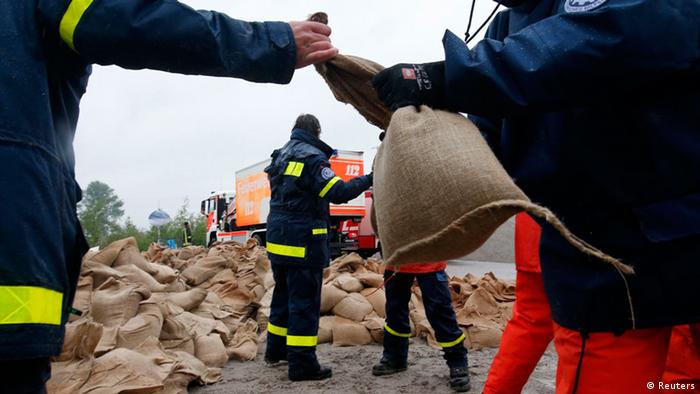
As the rising Elbe River covers roads and sidewalks, groups of volunteers organized through Facebook are cooking food, moving sandbags and helping with other flood preparations, he said.
"The participation around the whole town is just amazing," he said.
In Bavaria, the Danube River has topped flood defenses downstream from Deggendorf. And in Vilshofen, it is about 125 centimeters (4 feet) above the highest flood stage, it said.
Water levels remain extremely high on the Danube between Regensburg and Passau, in southern Bavaria, the meteorological service said.
In Passau, where the Danube River is joined by two other rivers, water levels topped a 500-year-old record Tuesday.
At least two men are reported to have died in Germany's southwestern state of Baden-Wuerttemberg.
A fireman died Saturday after suffering a heart attack while responding to flooding in Wilhelmsdorf, according to the state's Interior Ministry.
read more at CNN

BERLIN — Rising river levels are still threatening vast parts of eastern and southern Germany and hundreds of people were being evacuated in Dresden.
A city spokeswoman told German news agency dpa on Wednesday some 600 people needed to leave their homes and electricity was turned off in some parts of the eastern city that was flooded by the Elbe river.
Spokeswoman Heike Grossman said the peak of the flood in Dresden was expected later in the day.
In the eastern city of Halle, the downtown area was flooded. Elsewhere in the flood-affected regions, soldiers and residents were reinforcing soaked levees with sand bags to keep them from breaking.
In the hard-hit Bavarian city of Passau, the water was slowly receding, leaving behind vast amounts of debris.
The Associated Press

Floods Across Central Europe:
Heavy rains swelled major rivers in Germany, the Czech Republic and Austria causing widespread destruction. By MELISSA EDDY
Published: June 5, 2013
 PIRNA, Germany — Officials in eastern Germany’s river cities and towns on Wednesday urged citizens in vulnerable areas to evacuate their homes as the Elbe River and its tributaries swelled ever higher, amid some of the worst flooding that some regions have seen in centuries.
More than 600 residents of Dresden, where the floodwaters were expected to peak later in the day, were brought to safety, city officials said. Electricity and water services to the city’s affected center were cut off. Farther north in Bitterfeld, some 10,000 people were asked to leave their homes after a levee on the Mulde River burst.
On Tuesday, Chancellor Angela Merkel pledged 100 million euros, about $130 million, in immediate aid for all flood-stricken regions and left open the possibility that more could be made available.
Ms. Merkel toured three of the hardest hit areas Tuesday, including Pirna, a Baroque town along the Elbe to wade through ankle-deep floodwaters and visit flood victims. Toni Schacha, a cafe owner, laid down his caulking gun on a stack of sandbags and strained to catch a glimpse of her.
 He had put up plywood across the front of his cafe and needed more sealant to keep some of the highest floodwater in five centuries from seeping in. “Silicone! I need more silicone!” Mr. Schacha, 33, called out. But only other residents engaged in the same battle with the elements — emptying homes and businesses of furniture and inventory and barricading doors and windows with sandbags — could hear. The chancellor was already hurrying to her next destination, an inundated village in the neighboring state of Thuringia.
Mr. Schacha went back to applying sealant. “Moral support,” he said. “All anyone can give us now is moral support.”
“What is important now is that we are able to get the aid quickly to people,” Ms. Merkel said in Passau, in southeastern Germany, where water still filled the streets of the medieval old town, although it was beginning to recede. On Monday, the Danube there reached a record level of 42 feet, which the authorities said was the highest in 500 years.
READ MORE AT NY TIMES
He had put up plywood across the front of his cafe and needed more sealant to keep some of the highest floodwater in five centuries from seeping in. “Silicone! I need more silicone!” Mr. Schacha, 33, called out. But only other residents engaged in the same battle with the elements — emptying homes and businesses of furniture and inventory and barricading doors and windows with sandbags — could hear. The chancellor was already hurrying to her next destination, an inundated village in the neighboring state of Thuringia.
Mr. Schacha went back to applying sealant. “Moral support,” he said. “All anyone can give us now is moral support.”
“What is important now is that we are able to get the aid quickly to people,” Ms. Merkel said in Passau, in southeastern Germany, where water still filled the streets of the medieval old town, although it was beginning to recede. On Monday, the Danube there reached a record level of 42 feet, which the authorities said was the highest in 500 years.
READ MORE AT NY TIMES
Floods hit Germany at economic low point
 He had put up plywood across the front of his cafe and needed more sealant to keep some of the highest floodwater in five centuries from seeping in. “Silicone! I need more silicone!” Mr. Schacha, 33, called out. But only other residents engaged in the same battle with the elements — emptying homes and businesses of furniture and inventory and barricading doors and windows with sandbags — could hear. The chancellor was already hurrying to her next destination, an inundated village in the neighboring state of Thuringia.
As Germany battles severe flooding in parts of the country, the cost of the damage is hitting Europe's biggest economy just as it has barely overcome a harsh winter that has driven it to the brink of recession.
In the first quarter of 2013, German Gross Domestic Product grew by just 0.1 percent. The country just managed to avoid a recession, which is defined as two successive quarters of economic contraction.
Much of the hope for economic recovery lies with key economic indicators which predict accelerating growth in the coming months.
However, economists are becoming more and more skeptical about the country's growth outlook as they fear that the much-vaunted spring upswing might drown in the deluge.
"As the flood levels rose, so did the problems for German businesses," says Alexander Schumann, chief economist at the German chambers for Industry and Commerce (DIHK).
He told DW that it was especially the construction industry which had been unable to boost activity due to the heavy rainfall. The sector was particularly hard hit, as it was already facing a huge backlog of orders stemming from the long and harsh winter in Germany.
In the first quarter of 2013, German Gross Domestic Product grew by just 0.1 percent. The country just managed to avoid a recession, which is defined as two successive quarters of economic contraction.
Much of the hope for economic recovery lies with key economic indicators which predict accelerating growth in the coming months.
However, economists are becoming more and more skeptical about the country's growth outlook as they fear that the much-vaunted spring upswing might drown in the deluge.
"As the flood levels rose, so did the problems for German businesses," says Alexander Schumann, chief economist at the German chambers for Industry and Commerce (DIHK).
He told DW that it was especially the construction industry which had been unable to boost activity due to the heavy rainfall. The sector was particularly hard hit, as it was already facing a huge backlog of orders stemming from the long and harsh winter in Germany.
 But hotel and restaurant owners were also affected, suffering losses from the bad weather at the start of the tourist season in Germany - as were farmers offering seasonal products such as strawberries and asparagus.
Disrupted supply chains
Individual companies had their own stories to tell: Krones, global market leader in manufacturing bottling machines, had to shut down production in two plants in upper Bavaria. The region is among those severest hit by the floods, and Krones workers were unable to get to work on inundated roads.
In Zwickau, Volkswagen (VW) had to stop its auto production, VW Saxony spokesman Gunter Sandmann told DW, and Monday's early shift was asked to stay at home.
 "We were unsure whether the damage done to the transport infrastructure would enable suppliers to deliver their products in time, he added.
Volkswagen has been able to resume production, prompting Sandmann to speak of a lucky escape.
The same is true for the chemical companies located in the Bitterfeld chemical triangle, where the German armed forces were able to protect production facilities from the raging floods.
Insurance industry officials said they were still unable to put a price tag on the losses caused by the flooding in eastern and southern Germany. However, the total of damage claims in the wake of the last so-called Flood of the Century in Germany in 2002 had amounted to 1.8 billion euros ($2.35 billion), Kathrin Jarosch from the GDV insurance industry lobby group says: "We'll have figures this time at the earliest at the end of next week."

Disrupted supply chains
Individual companies had their own stories to tell: Krones, global market leader in manufacturing bottling machines, had to shut down production in two plants in upper Bavaria. The region is among those severest hit by the floods, and Krones workers were unable to get to work on inundated roads.
In Zwickau, Volkswagen (VW) had to stop its auto production, VW Saxony spokesman Gunter Sandmann told DW, and Monday's early shift was asked to stay at home.
 "We were unsure whether the damage done to the transport infrastructure would enable suppliers to deliver their products in time, he added.
Volkswagen has been able to resume production, prompting Sandmann to speak of a lucky escape.
The same is true for the chemical companies located in the Bitterfeld chemical triangle, where the German armed forces were able to protect production facilities from the raging floods.
Insurance industry officials said they were still unable to put a price tag on the losses caused by the flooding in eastern and southern Germany. However, the total of damage claims in the wake of the last so-called Flood of the Century in Germany in 2002 had amounted to 1.8 billion euros ($2.35 billion), Kathrin Jarosch from the GDV insurance industry lobby group says: "We'll have figures this time at the earliest at the end of next week."

As water levels rise in Germany's flood zones, the situation is growing more dramatic. It has been just over a decade since the country's last flood crisis, but little has been learned from that, critics say.
But Andreas Schumann, a water supply expert at Germany's Ruhr University, says the memory of the 2002 catastrophe has already faded, adding, "We have an incredible deficit when it comes to awareness about flooding."
That is a problem in places where people have moved closer to the rivers from generation to generation, which is true in many parts of Germany.

The water expert adds that many feel a false sense of security due to the preventative technical measures undertaken, like higher and more stable dams and levies.
No perfect protection
Flooded streets near Chemnitz in the state of Saxony
Saxony was among the German states especially hard hit by the 2002 flooding. When asked how Saxony responded in the years afterward, state parliamentarian and environmental expert Andreas Heinz first said that much money was invested in technological measures like improved dams or larger reservoirs intended to absorb water in emergency situations.
 Andreas Schumann confesses that such measures represent a step forward. "There, the weak spots were recognized and improved," he said, but added, "There is no such thing as absolute flood protection and technological flood prevention measures must always include considerations of what happens when they fail."
Winfried Lücking, an expert on flood protection with the German environmental group BUND, sees things differently. He says there has not been enough consideration of how the dangers of flooding could be better controlled. At a national conference on river issues in 2002, the federal government urged people to give the bodies of water more space. The point in doing so is reducing water levels by allowing more room for the water to flow, including into flood plains with dikes positioned somewhat further away from riverbanks than they often are currently.
"Regrettably, little has been done," Lücking says. On the Elbe, just a handful of dikes were put in place - and partly due only to heavy pressure and involvement from environmental groups.
Creating adequate dikes, however, represents a mammoth project that cannot be completed quickly. For generations, people have pushed the dikes closer and closer to the rivers themselves as areas near their banks have been developed more heavily. Lücking notes this process cannot simply be reversed within a decade, particularly in light of the complicated planning involved.
'Each event is different'
'Each event is different'
Undertaking flood prevention measures collides with a number of other interests. Landowners do not want to give up their fields, homeowners are unwilling to part with their residences and communities fear limitations to their development potential. As such, resistance runs high when it comes to allowing more space for rivers to spill over their banks.
"Everyone says, you're welcome to do that, just not near us," explains Winfried Lücking.
READ MORE AT DW
German city copes after worst flood in 500 years
Prague Zoo evacuated and Charles Bridge closed as river waters rise
The Associated Press>
Posted: Jun 4, 2013 8:30 AM ET
Last Updated: Jun 4, 2013 10:50 PM ET

Germany dispatched thousands of soldiers Tuesday to help cities and towns cope with flooding from the rain-soaked Danube and other southern rivers — reinforcements that came a day after the Bavarian city of Passau saw its worst flooding since 1501.
The death toll rose to at least 10, including seven in the neighboring Czech Republic, where a man was found dead in the water in eastern Bohemia. Another nine people have been reported missing in the floods that have also swept through Austria and Switzerland.
Some 5,000 German soldiers were called in as well as more than 2,000 federal disaster workers and 700 federal police to sandbag areas in danger of flooding and provide other assistance. Water levels were still rising in major rivers such as the Danube and Elbe as well as tributaries.
In the Czech Republic, authorities evacuated animals from the Prague zoo and closed a major bridge in the capital on Tuesday.
The rain in Prague has halted but the Vltava River that runs through the city and flows into the Elbe was still raging, with currents and water levels far exceeding the norm. The famous Charles Bridge was closed as a precaution.

Katerina Sulova / Zuma Press
Prague, Czech Republic - A Humboldt penguin watches flood waters rise from inside its enclosure at the Prague Zoo, as the swollen Vltava river continues to rise.
Authorities said the level of the Vltava in Prague has now begun to drop but excess water was expected to soon hit the Elba river, into which it flows downstream.
This year's spike in water levels has been far less than in 2002 so far, but still forced the Prague Zoo to evacuate animals after the lower side of the park was submerged and will once again need major reconstruction.
Passau, a city built around the intersection of the Danube, the Inn and the Ilz rivers, has been one of the worst hit by the flooding in central Europe.
After hitting the highest level in more than 500 years in Passau on Monday, the floodwaters there had dropped by an estimated 2.5 metres Tuesday but cities downstream like Regensburg were bracing for the water's arrival.
READ MORE AT CBC.CA

Flooding in Czech Republic, Germany, Austria
Vit Simanek / AP
The Prague Zoo flooded by the swollen river Vltava photographed in this Tuesday June 4 aerial view.
Heavy rainfalls caused flooding in in Germany, Austria, Switzerland and the Czech Republic
The Prague Zoo flooded by the swollen river Vltava photographed in this Tuesday June 4 aerial view.
Heavy rainfalls caused flooding in in Germany, Austria, Switzerland and the Czech Republic
03/06 04:26 CET
 In the historic centre of Prague, the mayor has warned residents may have to be evacuated from their homes if the River Vitava gets any higher. 300 soldiers are helping to build temporary barriers and pile sandbags around buildings. Another 2000 are on standby.

Southern and Eastern Germany have also been affected. Three rivers meet here at the city of Passau. Some have resorted to using boats to get around the streets.

The month of June normally heralds the official arrival of summer, but parts of central Europe find themselves struggling with floods.
The Prime Minister has declared a state of emergency for most of the nation. At least two people have died and several others are missing.
Patients have already been evacuated from a hospital under threat from the rising water. Animals have also been rehoused from the city zoo.
Southern and Eastern Germany have also been affected. Three rivers meet here at the city of Passau. Some have resorted to using boats to get around the streets.
And in Austria, torrential rain has caused widespread flooding and landslides, forcing hundreds of people to leave their homes.
Train lines have been closed in affected areas.
SOURCE: EURONEWS.COM
Barbara Gindl / EPA
Firefighters begin clean up efforts after water flooded streets and houses in Huettau, Salzburg, Austria, on.June 4. Flooding since June 1 has so far claimed at least nine lives and led to mass evacuations. Several others have been reported missing as a result of the floods, which cover an area stretching from southern Germany, through to Poland, Switzerland, the Czech Republic and Austria.


