COLUMBUS, Ohio (AP) - The operator of a northeast Ohio deep-injection well tied to earthquakes in the area has yet to receive the state clearance it says is necessary to conduct independent seismic research aimed at proving the well wasn't the cause of the quakes.
Documents show D&L Energy in Youngstown sought state permission in February to re-open the shuttered well - after plugging it to a shallower depth - and then to measure the vibrations for its analysis. The Ohio Department of Natural Resources has yet to respond, in what could signal a permanent delay.
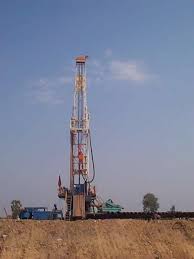 D&L closed the Youngstown well after a New Year's Eve quake reached 4.0 magnitude. The state then imposed a moratorium on deep-injection drilling near the site, halting regional disposal of millions of gallons of wastewater from hydraulic fracturing for natural gas or oil and other forms of drilling.
ODNR spokesman Carlo LoParo said Friday the state can't approve the request as long as the indefinite moratorium is in place.
A March 9 state report tied the well to the quakes and imposed new state regulations on deep-injection activity.
The state review pointed to previously unidentified fault lines under the well site, which reached 8,000 to 9,000 feet below ground, as the likely source of the quakes. Smaller tremblers had been occurring over the well's first year or so of operation, but it wasn't until back-to-back quakes on Christmas Eve and New Year's Eve that the issue grabbed widespread public attention.
D&L had said it would hire its own independent consultants to study the earthquakes, with the hope of disproving any link and getting the year-old well re-opened.
Company spokesman Vince Bevacqua said D&L is still waiting for the agency's guidance on its Feb. 28 letter.
In it, the company proposed procedures its consultants, Schlumberger Reservoir Group and Microseismic Inc., would undertake to plug North Star No. 1 in Youngstown to a shallower depth, re-start operations, and monitor for seismic activity going forward. The letter also addressed procedures at three other wells the company operates within a 7-mile radius.
Bevacqua said in an e-mail that the company's independent studies "would proceed contingent on ODNR's approval." He declined to interpret the delay as a bad sign for the well's future.
"D&L makes no assumption about ODNR's intentions and continues to work cooperatively with the agency pending the resolution of these matters," he said in an e-mail.
LoParo said that shouldn't stop D&L from seeking answers about the quakes.
"They can conduct a comprehensive review of their well regarding the activity that occurred in the past year, and all possible induced seismic activity, without state approval," he said. "It is their well, it is their property. If they want to analyze the geography surrounding the well, if they want to analyze the well itself, collect core samples, study previous injection, they're certainly free to go with that."
6.7-magnitude earthquake shakes islands in Tonga
POSTED APRIL 28, 2012 BY BNO NEWS
NEIAFU, TONGA (BNO NEWS) -- A strong earthquake struck just off the Pacific island nation of Tonga on late Saturday evening, seismologists said, but there were no immediate reports of damage or casualties.
 The 6.7-magnitude earthquake at 11:08 p.m. local time (1008 GMT) was centered about 78 kilometers (48 miles) west of Neiafu, a town on the island of Vava'u. It struck about 129.4 kilometers (80.4 miles) deep, making it an earthquake with intermediate depth, according to the United States Geological Survey (USGS).
The USGS said no damage was to be expected but estimated that some 123,000 people living on islands near the epicenter may have felt light to moderate shaking. Several residents on a nearby island confirmed they felt light shaking, but there were no immediate reports of damage or casualties.
Because earthquakes with a magnitude below 7 do usually not generate tsunamis, no tsunami alert was issued. "A destructive tsunami was not generated based on earthquake and historical tsunami data," the Pacific Tsunami Warning Center said in a bulletin.
 Tonga is on the so-called 'Pacific Ring of Fire', an arc of fault lines circling the Pacific Basin that is prone to frequent and large earthquakes. Volcanic eruptions also occur frequently in the region, which is one of the most geologically active parts in the world.
Tonga, with a total population of around 104,000 people, is made up of 169 islands sprinkled over the Pacific Ocean about one-third of the way from New Zealand to Hawaii. Only thirty-nine of the islands are inhabited.
On September 29, 2009, an 8.1-magnitude earthquake struck 185 kilometers (115 miles) east-northeast of Hihifo on Tonga, unleashing large tsunamis that killed nearly 200 people and injured hundreds more in Tonga, American Samoa, Samoa, and other nearby islands.
ScienceNASA to Test GPS Earthquake Monitoring Network for Disaster Response
Tiffany Kaiser - April 25, 2012 12:03 PM


