Ad

Showing posts with label fish. Show all posts

Monday, April 29, 2013

UPDATED 4-29-2013 MASS ANIMAL DEATHS THIS APRIL 2013

UPDATE: 4-29-2013

Mystery as record number of seal pups continue to wash up on California coast just hours from death


Marine biologists on the West Coast are struggling to understand the reason why an alarming number of sea lion pups are turning up near death along Southern California's coastline.

Some 1,400 young California sea lions were admitted to rehabilitation centers throughout the state since the beginning of the year, Sarah Wilkin of the National Oceanic and Atmospheric Administration told Fox News.
That number is five times the normal rate of beached pups that typically appear between January and April, Wilkin said.
Scroll down for video
Sea lion mystery: Marine biologists on the West Coast are struggling to understand the reason why an alarming number of sea lion pups are turning up near death along Southern California's coastline
Rising number: Some 1,400 young California sea lions were admitted to rehabilitation centers throughout the state since the beginning of the year
‘Nobody was quite prepared for the scope of this,’ she told Fox News. ‘The major common factor for all these stranded pups is that they're coming in emaciated, dehydrated, basically starving. They have been unable to find enough food to sustain themselves.’
Wilkin and other marine biologists have yet to figure out why the pups are not getting enough of the fish they need for both nutrition and hydration is still unclear. 


What is known is that the epidemic only affects the young as most of the sick sea lions arriving on the shore were born last summer.
‘The pups can't dive as deep,’ said Wilkin. ‘They can't travel as far so they might be more impacted in even just a slight change in the distribution of prey.’
'Unusual mortality event': NOAA has labeled the bizarre and upsetting phenomena an 'unusual mortality event' with hopes that the organization will receive additional funding for rehabilitation and research
Unprecedented: David Bard with the Marine Mammal Care Center in San Pedro said his facility usually receives between 50 and 80 animals in the first quarter of the year, while in 2013 it has treated more than 400 already
NOAA has labeled the bizarre and upsetting phenomena an ‘unusual mortality event’ with hopes that the organization will receive additional funding for rehabilitation and research.
‘The numbers speak for themselves,’ David Bard with the Marine Mammal Care Center in San Pedro told Fox News. ‘As far as the underlying causes, anything that I can tell you would be a guess.’
Bard said his facility usually receives between 50 and 80 animals in the first quarter of the year, while in 2013 it has treated more than 400 already.
‘What we started seeing since January is animals coming in at roughly half the weight that they should be,’ said Bard. ‘You can see their shoulder blades, you can see their spines.’
Wilkin says the NOAA is working with fishery scientists and oceanographers to pinpoint the exact cause, including possible food shortages, exposure to biotoxins, disease and human pollutants.


Read more: http://www.dailymail.co.uk/news/article-2316375/Mystery-record-number-seal-pups-continue-wash-California-coast-just-hours-death.html#ixzz2RpcgFPPV
Follow us: @MailOnline on Twitter | DailyMail on Facebook


--------------------END UPDATE--------------------------
note:  sorry in advance because as you read down this post, it overlaps at a point and things don't line up.  I tried to adjust the code to make it work and finally, after a couple of hours, I gave up on it so it is what it is.  There is definitely plenty of information, however, that will give you an idea about how bad the mass animal death quantity has become.  Here you go...

Bees dead by hundreds


Published on Apr 12, 2013
4 ,14 days 100′s of bees came 2 die at the front door of my apt, I still ask myself why? This is happening without logical reason..still they’re coming to die but by 40′s or 60′s everyday

HERE IS THE ANSWER TO THE MASS BEE DEATHS...
Colony collapse disorder
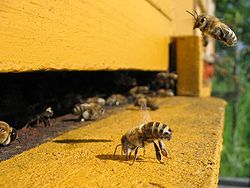
Colony collapse disorder (CCD) is a phenomenon in which worker bees from abeehive or European honey beecolony abruptly disappear. While such disappearances have occurred throughout the history of apiculture, and were known by various names (disappearing diseasespring dwindle,May disease,autumn collapse, andfall dwindle disease),[1] the syndrome was renamedcolony collapse disorder in late 2006[2]in conjunction with a drastic rise in the number of disappearances of Westernhoneybeecolonies inNorth America at that time.[3] European beekeepers observed similar phenomena in Belgium, France, the Netherlands, Greece, Italy, Portugal, and Spain,[4] and initial reports have also come in from Switzerland and Germany, albeit to a lesser degree[5]while the Northern Ireland Assembly received reports of a decline greater than 50%.[6]

The growth of neonicotinoids msuch as clothianidin and imidacloprid,some of the most widely-used pesticides in the world, has roughly tracked rising bee deaths since 2005.[7] In 2012, several peer reviewed independent studies were published showing that neonicotinoids had previously undetected routes of exposure affecting bees including through dust, pollen, and nectar;[8] that sub-nanogram toxicity resulted in failure to return to the hive without immediate lethality,[9] the primary symptom of CCD;[10] and indicating environmental persistence of neonicotinoid in irrigation channels and soil.[11] These studies prompted a formal 2013 peer review by the European Food Safety Authority that said neonicotinoids pose an unacceptably high risk to bees, and that the industry-sponsored science upon which regulatory agencies' claims of safety have relied is flawed.[12] CCD is probably compounded by a combination of factors.[13][14][15][16] In 2007, some authorities attributed the problem to biotic factors such as Varroa mites,[17] Nosema apis parasites,and Israel acute paralysis virus.[18][19] Other contributing factors may include environmental change-related stress,[20] malnutrition, and migratory beekeeping.

Colony collapse is significant economically because many agricultural crops worldwide are pollinated by European honey bees. Shortages in the US have increased the cost to farmers, renting bees for pollination services, up to 20% at times.[7]

More than 12,000 birds crashed in Utah’s west desert Monday
| The Salt Lake Tribune
First Published Apr 17 2013 04:27 pm • Last Updated Apr 17 2013 10:50 pm
The number of eared grebes rescued — and killed — after their Monday crash-landings at the U.S. Army’s Dugway Proving Ground was far higher than originally estimated.

Wildlife biologists and volunteers spent Monday and Tuesday gathering 12,800 water birds, carrying the 7,828 surviving birds by pickup trucks to ponds in the region.

The birds were migrating back to the Great Salt Lake for the summer, but apparently became disoriented by snow and fog and mistook wet roads and parking lots for water. Built for water, with legs far to the back of their bodies, they can lift off from the ground only with great difficulty.
An estimated 100 birds were taken to rehabilitation facilities, Dugway spokeswoman Paula Thomas said.
Biologists working under a permit from the U.S. Fish and Wildlife Service were burning and burying the birds that died or were so seriously injured they had to be euthanized.
The Salt Lake Tribune
Shock as 150 dead animals found on North Yorkshire farm
Wednesday, April 24, 2013
MEMBERS of a small rural community have spoken of their shock after scores of animals were found dead or dying on a North Yorkshire farm.
About 150 sheep and lambs, three cows and three horses were found dead at a farm in West Layton, between and Barnard Castle, after a concerned member of the public contacted the RSPCA.

North Yorkshire Police and a vet went with RSPCA officers to the farm on Monday, March 28.
It is not known how the animals died, but the animal rescue charity reassured other local farmers that it was not because of disease that could be transmitted to other livestock.
A further 50 sheep and one cow had to be put down on a vet’s advice, and 16 horses and a dog were taken into the care of the RSPCA.
About 800 more sheep had been saved, with half being sold along with 20 cows, and the welfare of the rest of the flock is currently being overseen by a stockman brought in to the farm by the charity.
Leanne Plumbtree, a spokesperson for the RSPCA, said: “”The owner of the farm has been interviewed by the RSPCA with a view to bringing a private prosecution.
“No further information is available at this time.”
READ MORE ATBEFORE IT'S NEWS
Dozens of birds slam dead into downtown Minnesota city buildings
Bohemian waxwings
April 24, 2013
By: Johnny Kelly
Dozens of birds have been found dead after slamming into downtown buildings in one Minnesota city.

The reported Wednesday (April 24) that at least 30 Bohemian waxwing birds were killed and three others were injured after flying into buildings inDuluthon Monday and Tuesday.
A majority of the Bohemian waxwings were found dead in the plaza area adjacent to the Minnesota Power building in downtown Duluth, said Amy Rutledge, manager of corporate communications for Minnesota Power.
The birds apparently flew into tinted glass partitions adjacent to the building as they were flying up to trees.
“We’re on a major migration route,” said Peggy Farr, a Wildwoods rehabilitator and board member. “This is a good time of year to close the blinds so the birds don’t get faked out by the windows.”
Rutledge said Minnesota Power plans to put stickers on the glass panels that the waxwings hit so birds will be more likely to see the panels.
Bohemian waxwings, just smaller than robins, often move and feed in large flocks. In the Duluth area, these birds frequently feed on berries of mountain ash or crabapple trees.
It is believed that the birds may have become disoriented after eating the berries due to the fact that some are fermented or contain some small amounts of alcohol.
Duluth birder and birding guide Erik Bruhnke said that sometimes happens.
I know that waxwings become intoxicated because of alcohol when the berries are fermented,” Bruhnke said.
“I have seen, a couple times, where the whole flock will sit on the ground in a slight daze after eating large amounts of fermented berries and fruits,” he added. READ MORE ATexaminer.com
..................................................................
MY PERSONAL OPINION ON BIRDS FLYING INTO BUILDINGS IN MASS, OR FLYING STRAIGHT DOWN INSTEAD OF STAYING IN THE AIR IS THAT THE MAGNETIC FIELD THAT THEY USE TO GUIDE BIRDS AND OTHER ANIMALS IN THEIR MIGRATION IS CHANGING AND THERE ARE HOLES WHICH CAN CAUSE ISSUES. ADDITIONALLY, MINNESOTA LIKELY GETS SOME OF THE SOLAR WIND BECAUSE THEY DO SEE AURORAS AND THE SOLAR WIND IS EXTREMELY HIGH RIGHT NOW AND HAS BEEN FOR A COUPLE OF DAYS.

BIG SUNSPOT, CHANCE OF FLARES:Sunspot AR1726 is turning away from Earth, but the threat of flares is not subsiding. The sunspot has a delta-class magnetic field that harbors energy for powerful eruptions. NOAA forecasters estimate a 40% chance ofM-classflares and a 15% chance of X-flareson April 25th.Solar flare alerts: text,voice.

Amateur astronomer Alan Friedman photographed the sunspot on April 23rd. His H-alpha telescope, tuned to the red glow of solar hydrogen, revealed a seething active region spanning more than 125,000 km (10 Earth diameters) wide:

"The full-sized imagereminds me of a Clementine orange," notes Friedman. "I captured the fruity shot through a turbulent jet stream on a beautiful spring day in Buffalo, NY."
The sheer size of the sunspot makes it an easy target for backyard solar telescopes.

source:http://spaceweather.com/ 60,000 ducks killed in Quake
Shanghai Daily
April 25, 2013

Troops wearing protective clothing move dead ducks from a poultry farm in Lushan County in earthquake-hit Ya’an City in southwest China yesterday. About 60,000 ducks were safely disposed of to prevent disease. The troops also treated carcasses at sites where mass deaths of animals occurred. As of yesterday afternoon, the 7.0-magnitude had killed 196 people and left another 21 missing. School classes are expected to resume on Saturday in the quake-hit region, according to the provincial education department, with this year’s college entrance exam fast approaching. Meanwhile, after being slighted by donors, China’s Red Cross is to reopen an investigation into the Guo Meimei affair that eroded its credibility.
SOURCE:english.peopledaily.com.cn Fungal pneumonia blamed for dolphin and fish deaths, Australia Algae and pneumonia blamed for marine deaths Testing on dead dolphins and fish which washed up on South Australian beaches recently showed fungal pneumonia and naturally-occurring algal blooms were to blame.
Satellite imagery from the CSIRO showed high levels of algae in the water during March, which led to gill irritation and effectively suffocated the fish.
Diagnostic testing of fish samples ruled out infectious fish diseases for the mass kill.
Autopsies are still being done on 26 dead dolphins, but initial testing has indicated theydied of fungal pneumonia.
The SA Museum said the affected dolphins were mostly juveniles or young adults, which meant they were more susceptible than others to catching infections.
Scientists think the worst of the marine problems has now passed.
The South Australian Government said it was clear from the early findings the new Adelaide desalination plant was in no way to blame for the marine deaths.
Worry over marsh horses ‘dropping dead like flies’
Saturday, April 20, 2013
By RICHARD YOULE

HORSES have been “dropping like flies” on the Loughor Estuary, according to a lifeboatman.
John Edwards said horses have congregated at the marsh near Loughor inshore lifeboat station for years, and knew how to steer clear of the incoming tide, but that a high number of the animals had got stuck in the mud or perished.
The Post has been emailed photographs which are too shocking to print of horse carcasses on the marsh.
The RSPCA is investigating. Swansea Council said the dead animals were on the Carmarthenshire side of the estuary, while Carmarthenshire Council said the area was “a bit of a no-man’s land”.
Loughor inshore lifeboat station secretary Mr Edwards said: “I don’t know what is going on. We have never had these problems before. All of a sudden they are dropping like flies.”
Mr Edwards said the lifeboat had launched to help mud-trapped horses, but had to be careful not to scare the animals and make the situation worse.
“Unless they are actually in danger we won’t respond,” he said.
“People say it’s the owners’ responsibility, but a lot of them are wild horses. Our concern is that if the animals are left to rot they (their remains) will go back into the water.”
Mr Edwards said there were around 40 horses opposite the lifeboat station, and that an elderly man often used to pop along with bread for them. “When the tide comes in they go onto the bank and huddle together,” he said.
The anonymous photographer described seeing 24 dead horses — or remains of. “For any person that feels these horses are at home on these marshes and estuary, may they think again,” she said.
The Welsh Government is holding a consultation on fly-grazing and horse abandonment which ends on April 29.
The RSPCA meanwhile said it had removed three live horses this week from the Gower marshes which are now in the charity’s care.
An RSPCA spokesman added: “Police and Natural Resources Wales have removed all the animal carcasses that were on the site. An RSPCA investigation is ongoing.”
101 dolphins wash up on Italian coast By Sam Adams
PUBLISHED:
22 April 2013
Scientists believe that more than 100 dolphins washed up dead along the Italian coast were struck down by a killer strain of measles.
A total of 101 dolphin carcasses have been counted on the west coast of Italy since the beginning of the year.
All are the same species – striped dolphins which have a distinctive blue and white pattern and grow to about eight feet long. They usually live for 50 or 60 years.
Concerns: More than 100 striped dolphins have washed up on the west coast of Italy during the last three months
The bodies have appeared on beaches spanning more than half the western coastline of Italy, from Tuscany to Calabria, as well as the island of Sicily – which suggests that the problem is not caused by humans pollutants such as oil.
Instead the deaths are being attributed to a possible outbreak of Morbillivirus, the virus that causes measles in humans, which scientists believe created a gateway for other illnesses among the animals.
Thirty-five per cent of the corpses tested positive for dolphin measles, Italy’s Ministry for the Environment said.
A statement from the ministry read: ‘At the moment the suspected cause of the mass cetacean deaths is measles (morbillivirus delphini) and the bacterium Photobacterium damselae.
‘The deaths could be caused by food shortages which weaken the animal making them more easily exposed to diseases and parasites.’ A similar epidemic decimated Spanish dolphin populations between 2006 and 2008.
The current strain has mostly affected young dolphins between the age of 15 and 20, who have not come across the disease before.
Animals born after a 1990-92 epidemic are devoid of the antibodies needed to defend them against the disease, scientists said.
None of the dead dolphins had food in their stomachs, which suggests that they may have starved to death because the virus left them weakened.
Overfishing which has left the Mediterranean with sparse reserves of dolphin prey could also be a factor, the government agency said.
Striped dolphins feed on small prey including hake, cuttlefish, squid, mackerel and sole, all species subject to intensive fishing.
The species is found in all the world’s tropical oceans. They are very sociable, travelling in large pods which can include hundreds of dolphins and are among the most acrobatic breeds. There are thought to be around two million striped dolphins in the world.
HERE IS A MASS ANIMAL DEATH LIST

18th April 2013 – 20,000+ Livestock dead from snowfall in Northern IrelandLink
17th April 2013 – Thousands of Birds drop dead from sky at Army base in Utah, AmericaLink
17th April 2013 – Hundreds of Pigs, Dogs and other domestic animals dead in Henan Province, ChinaLink
16th April 2013 – MILLIONS of Oysters wiped out by disease in Port Stephens, AustraliaLink
16th April 2013 – 7,000 Fish found dead in the Vasse estuary at Wonnerup, AustraliaLink
15th April 2013 – 400 Turtles wash up dead so far this year in Tamil Nadu, IndiaLink
12th April 2013 – 200,000 Salmon killed in Elwha River, Washington State, AmericaLink
13th April 2013 – Thousands of Fish dying at the Big Eau Pleine Reservoir, Wisconsin, AmericaLink
12th April 2013 – 5,000 Swifts dead from Bird Flu in Hanoi, VietnamLink
10th April 2013 – 13,000+ Fish found dead in a river in Shizuoka Prefecture, JapanLink
9th April 2013 – 190 Vultures drop out of sky dead and dying in Chaguaramas, TrinidadLink
9th April 2013 – 8,393 Livestock dead from snowfall in Northern IrelandLink
9th April 2013 – 13,000 Chickens killed due to Bird Flu inCambodia.Link
8th April 2013 – Tonnes of dead Fish found on Dannemore lake in SwedenLink
8th April 2013 – Thousands of Sea Birds wash up dead on North East coast inEnglandLink
SOURCE:http://icwatch.wordpress.com/mass-animal-deaths-march-april-2013/

For the fifth time in ten years, a synthetic rubber dumped into the ocean is causing massive seabird die-offs.

By Joanna M. Foster
April 24, 2013 Staff at the RSPCA West Hatch Wildlife Centre wash a guillemot bird on February 4, 2013 near Taunton, England. (Photo: Matt Cardy/Getty) There’s no scarcity of beachcombers on the Southwest coast of England this time of year. Usually, they’re on the lookout for jewel-like shards of sea glass washed smooth by the ocean, or beautifully knotted bits of driftwood. This spring, however, the beach’s treasures are obscured by thousands of dead birds. In just the last ten days, over 1,500 dead seabirds glazed in a sticky, clear film have washed ashore in Southwest England “Sometimes the birds are just so covered in the stuff you have to pry their little emaciated bodies off the rocks,” said Marc Smith, Marine Warden of Dorset Wildlife Trust. “And then you have dead birds stuck to your gloves.” The culprit? Polyisobutylene, or PIB, a kind of synthetic rubber developed in the 1940s. It is used in the manufacturing of chewing gum, adhesive tape, and sealants. It is currently perfectly legal for ships to dump between 75 and 350 litres of PIB into the ocean when they wash their tanks or clear ballast water. When PIB hits seawater it turns into a waxy, glue-like slick, floating just beneath the surface, >“Bacteria have a hard time breaking this stuff down,” said Smith. “So it just floats there. We think it might attract bits of seaweed and other natural ocean debris, which in turn attract fish and then the fish attract the sea birds. They dive right in, their wings essentially get glued to their bodies. They can’t move, they can’t eat, they freeze or starve to death out at sea and their bodies wash up on the beach.” READ MORE AT takepart.com

Friday, April 12, 2013

More Mass Animal Deaths With No Explanation...


9 April 2013
The carcasses of more than 8,000 sheep that died in snow blizzards last month have been collected from NI farms.
                                    
source:  bbc.co.uk

10 April 2013
CHINA - More than 200 dead pigs have been retrieved from the waterways of Changzhou in Jiangsu province, local media reported on Tuesday, 9 April.
As of Monday (8 April), 113 pigs had been fished from rivers in the city's Tianning district, while another 100 decomposed carcasses were found in waterways in Wujin district, the Changzhou Daily reported.

source: thepigsite.com


City must consult federal agency when removing dead sea lions at La Jolla Cove *GRAPHIC*GROSS*

Tuesday, April 9, 2013 18:31

Sea lion carcasses found at La Jolla Cove are part of a rash of pup deaths occurring from San Diego to Ventura.


‘Tonnes’ of dead fish found on Swedish lake

Tuesday, April 9, 2013 6:01


Published: 8 Apr 13
Masses of fish found dead on a lake in eastern Sweden have left experts theorizing that the harsh winter and icy conditions prevented the fish from getting enough oxygen.


The Dannemore lake, near Östhammar in the east of Sweden, was discovered to be covered with floating fish this weekend as the ice began to melt. Among the dead fish were pike, perch, roach, and bream.

"It was not a pleasant sight, there were tonnes on fish on the lake," Timo Hakulinen, who made the discovery, told the Aftonbladet newspaper.

source: thelocal.se

23 Dolphin deaths add to mystery in Indian River Lagoon since Jan. 1

Scientists work to explain link, cause of manatee, pelican deaths
Apr. 10, 2013
Written by Jim Waymer
FLORIDA TODAY
Mysterious manatee and pelican deaths mount: Manatee deaths have reached 100 and pelican deaths top 250 in the Brevard County region. Video by Jim Waymer.
Add bottlenose dolphins to this year’s list of species dying mysteriously in the Indian River Lagoon.
Researchers have documented 23 dead dolphins in the lagoon since Jan. 1, all but a few in Brevard County. That’s more than twice what researchers would expect, based on the death rate during the past decade.
"It’s especially scary now to be losing so many manatees, and now dolphins," said Teresa Mazza, a biologist with the Hubbs-SeaWorld Research Institute, which gathers the carcasses for research purposes.
The lagoon has seen at least 100 mysterious manatee deaths in just over eight months and 250 dead pelicans in the past two months, with most in Brevard.
Most of the dead dolphin have been adult females. The bottlenose deaths have occurred from Titusville to Central Brevard.

source: floridatoday.com 

and there are many, many more...most of which have no explanation.


Friday, February 8, 2013

Mass Animal Deaths. Mass Bee Colony Deaths. Stormy Weather, Starvation, Pollution or Hypoxia?

MY NOTES AND THINGS THAT I FEEL ARE VERY IMPORTANT ARE HIGHLIGHTED IN YELLOW.

Biological Hazard in Australia on Thursday, 24 January, 2013 at 04:15 (04:15 AM) UTC.
Base data
EDIS Number:BH-20130124-37979-AUS
Event type:Biological Hazard
Date/Time:Thursday, 24 January, 2013 at 04:15 (04:15 AM) UTC
Last update:---
Cause of event:
Damage level:Unknown Damage level
Geographic information
Continent:Australia - New-Zealand
Country:Australia
County / State:State of Victoria
Area:Lake Boort
City:
Coordinate:S 36° 7.646, E 143° 44.540
Number of affected people / Humanities loss
Foreign people:Affected is unknown.
Dead person(s):---
Injured person(s):---
Missing person(s):---
Evacuated person(s):---
Affected person(s):---
SOURCE:HERE 
HOW IS IT THAT A BIO HAZARD HAS ANYTHING TO DO WITH THE FOLLOWING WHEN THE FOLLOWING IS BLAMED ON STORMY WEATHER?

Thousands of dead starfish wash up on Lincolnshire beach following stormy weather

  • Whelk eggs and shells were also washed ashore at Cleethorpes
  • Conservationists said 'strandings' have happened before
  • It's thought rough seas in shallow water may have dislodged them


Thousands of dead starfish have washed up on a beach in Lincolnshire after a period of stormy weather.

Shocked photographer Simon Peck estimates that 4,000 starfish - along with whelks' eggs and pieces of shell - had surfaced on Cleethorpes beach.

Experts think that the animals were dislodged by rough waters in the recent wintry weather, with a similar incident happening at the same time last year.

Puzzle: Photographer Simon Peck was shocked to find around 4,000 starfish and bits of shell on the beach
Wetlands: Whelks' eggs also appeared at Cleethorpes beach. In the past, sea potatoes have washed up
Poignant: It's thought that rough seas dislodged the sea creatures at a sandy part of the coastline

Richard Harrington, communications manager at the Marine Conservation Society, said: 'These are all common starfish Asterias rubens. 


'The fact that there's what appear to be whelk eggs and different shells in these pictures, both shallow water residents, along with the common starfish, would back up the likelihood that it is simply stormy weather that has caused this big strand.

'We were aware of a strand like this in the region at this time last year, too.

'Mass strandings of starfish and sea potatoes, a kind of sand-dwelling sea urchin, happen quite regularly in different parts of the coast.

'They seem to occur most in winter, and around sandy areas, when it's likely that rough seas in shallow water dislodge them in large numbers.

'Strandings like this may be associated with breeding, indicated if all of the specimens that washed up are mature adults, but the common starfish tends to aggregate and spawn most in spring and summer - so that is unlikely.'

Millions of common starfish live in British seas. About the size of a hand, they are pinky orange when alive, but turn a bright orange when dry.

Their ideal feeding ground is a mussel bed, where millions of starfish will congregate at any one time. And it's here where they are most at risk.

Violent storms can send terrifically strong currents through the mussel beds where they are feeding, pluck them off their prey, carry them to the shore and dump thousands at a time on to a beach.

In the past, some mass strandings have been blamed on overfishing - with dredgers used to scrape the sea floor for mussels dislodging starfish or covering them with mud and sand.
(MY NOTE: THEY JUST BLAMED THIS ON STORMY WEATHER)


Coastal confusion: Similar 'mass strandings' have happened in the past - mostly in winter, around sandy areas
Strange: A similar stranding was seen last year. Sometimes they happen in Spring during breeding season

Although tides and strong currents are the most likely cause of this recent mass stranding, in a similar incident in Japan last year, starvation was to blame.
Read more: http://www.dailymail.co.uk/news/article-2267632/Thousands-dead-starfish-mysteriously-wash-Lincolnshire-beach-following-stormy-weather.html#ixzz2KL5oPFc8 Follow us: @MailOnline on Twitter | DailyMail on Facebook


OLIVE RIDLEY SEA TURTLES DIE IN BAY OF BENGAL INDIA

"Mass Death of Olive Ridleys & Leather Back Turtles at Bay Of Bengal,India" 
petition : www.thepetitionsite.com 
NATURE DRIVE NDTI_ 
Jan 2, 2013_ Once again Olive Ridley Turtles found dead in thousands. On 10th December 2012 NDTI volunteers reported from Barunei sea beach (Near Gahirmatha), Paradip sea beach , Astaranga sea beach, Chandrabhaga sea beach and Satapada (Chilika lake) of Odisha coastal belt (Bay of Bengal) a new wave of dead Olive Ridley Turtles. * Thousands of Olive Ridley turtle corp ...

THE FOLLOWING IS FOR THE VIDEO WHICH IS POSTED HERE, BUT ALSO ON YOUTUBE: Dec 18, 2012
"Mass Death of Olive Ridleys & Leather Back Turtles at Bay Of Bengal,India" petition :
http://www.thepetitionsite.com/214/98... NATURE DRIVE NDTI: Jan 2, 2013: Once again Olive Ridley Turtles found dead in thousands. On 10th December 2012 NDTI volunteers reported from Barunei sea beach (Near Gahirmatha), Paradip sea beach , Astaranga sea beach, Chandrabhaga sea beach and Satapada (Chilika lake) of Odisha coastal belt (Bay of Bengal) a new wave of dead Olive Ridley Turtles. * Thousands of Olive Ridley turtle corpses were found floating in areas around Paradip and stretches from Gahirmatha to Astaranga Sea beach.
We all know this Coastal Belt of Odisha, like Gahirmatha ,Astaranga Sea beach and the Rushikulya river mouth for mass nesting of the Olive Ridley Turtles and many other Turtle species from prehistorically times feeding on Jelly fish. They are part of the Oceanic flora and fauna that builds and preserves our fish stock. We have reason to suspect unnatural death of Olive Ridley turtles by external causes.

We deeply regret the man made environmental degradation of this place by increasing of traffic of trawlers and other ships, poor water quality and the pollution by some industries that mixes directly with Marine water without any proper treatment of water as required by Indian Environmental Norms. We presume that these developments are the main cause for the unusual deaths before nesting can take place.

NDTI demands action to protect the victims and punish the culprits who are directly and indirectly involved in this painful incident.

* 18-12-202 JOINT INSPECTION WAS HELD AT PARADIP SEA BEACH with a Forest Range Officer and his team and our NDTI Coordinators. Already on 25 Meters we have buried 20 Turtles together with Forest Department staffs. We made the point that the cause of large scale animal death must be investigated by the Forest Department before we blame any party for this disaster. Now we have to bury the dead Turtles to prevent a possible infection of others, so our work will continue for some days.

"Dead sea turtles at Paradip sea beach ( Bay Of Bengal ) - Shocking news from Paradip at the Coastal belt of Odisha ( Bay of Bengal ): Since last week thousands of sea turtles were found dead on the shoreline. Nature Drive NDTI is planning to bury the dead sea turtles on Wednesday in the sand at the beaches. We will send two of these sea turtles to the laboratory for further investigation to find the cause of their death. On first sight it seems to be caused by unhealthy water condition like increased acid levels rather than fishing activities. Whatever the reason for this massive death might be, it is very sad news for animal lovers. Dec 2012"

Iceland investigating mass herring deaths


REYKJAVIK, Iceland (AP) — Researchers in Iceland are blaming low oxygen levels in a shallow fjord for the deaths of tens of thousands of tons of herring.
Masses of dead herring have been found in Kolgrafafjordur fjord for the second time this winter, raising concerns about Iceland's fishery.
The Morgunbladid newspaper estimated the value of the 10,000 tons of fish found dead this week at 1.25 billion kronur ($9.8 million). An even larger number of fish died in December.
Roughly one season's worth of herring has been lost, Johann Sigurjonsson, director of Iceland's Marine Research Institute, said Wednesday.
He said herring tend to winter in large populations and may have depleted the oxygen in the shallow fjord. The danger should ease in spring when the herring spread out into a wider area, he said, downplaying fears that the entire herring fishery is in danger.
"We regard this as a serious event," he said. "We are investigating; we would like to find out if it is necessary to try to step in somehow."
The government's economic minister has increased funding for monitoring in the area to determine what can be done to prevent more fish from dying off. Some blame recent construction in the region for the kills.
Schoolchildren, town workers and volunteers have been cleaning up the dead fish, which can be turned into feed for mink and other animals.
Revenue from the sale is expected to go to local children and to area schools.


source: HERE

SO, I WAS WONDERING HOW THE WATER COULD ACTUALLY HAVE LESS OXYGEN, AS MANY OF THESE WATER DWELLING CREATURES DEATHS ARE BEING BLAMED ON LESS OXYGEN...

"Oxygen depletion can result from a number of natural factors, but is most often a concern as a consequence of pollution and eutrophication in which plant nutrients enter a river, lake, or ocean, andphytoplankton blooms are encouraged. While phytoplankton, through photosynthesis, will raise DO saturation during daylight hours, the dense population of a bloom reduces DO saturation during the night by respiration. When phytoplankton cells die, they sink towards the bottom and are decomposed by bacteria, a process that further reduces DO in the water column. If oxygen depletion progresses to hypoxia, fish kills can occur and invertebrates like worms and clams on the bottom may be killed as well.

Still frame from an underwater video of the sea floor. The floor is covered with crabs, fish, and clams apparently dead or dying from oxygen depletion.
Hypoxia may also occur in the absence of pollutants. In estuaries, for example, because freshwater flowing from a river into the sea is less dense than salt water, stratification in the water column can result. Vertical mixing between the water bodies is therefore reduced, restricting the supply of oxygen from the surface waters to the more saline bottom waters. The oxygen concentration in the bottom layer may then become low enough for hypoxia to occur. Areas particularly prone to this include shallow waters of semi-enclosed water bodies such as the Waddenzee or the Gulf of Mexico, where land run-off is substantial. In these areas a so-called "dead zone" can be created. The World Resources Institute has identified 375 hypoxic coastal zones around the world, concentrated in coastal areas in Western Europe, the Eastern and Southern coasts of the US, and East Asia, particularly in Japan.[6]

Jubilee photo from Mobile Bay
Hypoxia may also be the explanation for periodic phenomena such as the Mobile Bay jubilee, where aquatic life suddenly rushes to the shallows, perhaps trying to escape oxygen-depleted water. Recent widespread shellfish kills near the coasts of Oregon and Washington are also blamed on cyclic dead zone ecology.[7]"

SOURCE: WIKIPEDIA


THEN I WONDER, CAN THE VOLCANIC ACTIVITY HAVE ANYTHING TO DO WITH WHAT IS GOING ON IN ICELAND WITH THAT HUGE FISH DIE OFF RIGHT NOW.  CAN THAT TAKE OXYGEN OUT OF THE WATER?

ANSWER: YES


Asphalt volcanoes are ocean floor vents that erupt asphalt instead of lava. They were discovered in the Gulf of Mexico during an expedition of the research vessel SONNE, led by Gerhard Bohrmann of the DFG Research Center Ocean Margins in 2003. In 2007, seven more such structures were discovered off the coast of Santa Barbara, California. The largest of these domes lies at a depth of 700 ft (213 m). The structures were larger than a football field and about as tall as a six-story building, all made completely out of asphalt. You needn’t wonder why so many dead fish are washing up on the coast of California. Most of these asphalt volcanoes emit huge amounts of methane and, along with other submarine hydrothermal volcanic vents, they are the leading causes of hypoxia (dead-zones) in oceans, rising temperatures, ocean acidity and worsening oscillation weather patterns (El Niño/La Niña) as I mentioned in my book. -The Extinction Protocol
SOURCE: CLICK HERE

Dead fish raise concerns over water quality


  •  
  •  
  •  6th Feb 2013 5:00 AM

  • Thousands of fish bob in the Fitzroy River near South Yaamba Road
    Thousands of fish bob in the Fitzroy River near South Yaamba RoadContributed ROK
    10am: The State Labor Party members are calling on the State Government to launch an independent inquiry into whether the release of mine water into the Fitzroy River led to the death of thousands of fish.
    Shadow Environment spokeswoman Jackie Trad said reports of dead fish piled along the river were extremely concerning, particularly given the government recently approved the release of toxic mine water into the Fitzroy River.

    "The people of Rockhampton and surrounding communities deserve answers," Ms Trad said.
    "The fact remains if the fish kill and toxic water are linked, then any of the water testing promised by the government has not made a difference.
    "The people who end up drinking that water need to know the facts.
    "The State Government has been arrogantly deflecting questions about the environmental and health impacts of their mine water releases which is why any investigation into these deaths must be independent.
    "Any investigation should be led by experts with first-hand knowledge of the local environment and are on the ground to undertake immediate assessments."
    Member for Rockhampton Bill Byrne said the State Government had so far failed to consult or engage with locals about this issue, leaving the community completely in the dark.

    Bill Byrne.
    Bill Byrne.
    "This government waited until late on a Friday before the Australia Day long weekend, after newsrooms had clocked-off, to announce the first release of mine water," Mr Byrne said.
    "The government knows it has made an unpalatable decision that local residents completely oppose.
    "Instead of forcing mining companies to deal with their own excess water, the LNP are simply allowing the problem to flow through to our local communities and local environments."
    9.40am: GREENPEACE campaigner Louise Matthiesson says one of the paragraphs in this story could be read incorrectly and wishes to clarify the matter.
    She is talking about this paragraph - "She believed the state government was responsible for the mass wastage of river stock because more than 20 mine sites were discharging "polluted" water into the Fitzroy River."
    Ms Matthiesson says she was very careful not to say that the mine discharges are responsible for the fish kill, because there is currently no evidence of that, and there are a number of possible causes.
    "I did say that the state government is responsible for investigating the cause of the fish kill. I also said it is reasonable for residents to be concerned about the discharge of polluted water from mines upstream and the impact it could have on water quality in the river."
    5am: WHEN Sharon Meehan got to the Fitzroy River near her house yesterday she saw thousands of dead bodies in front of her.
    Mass murder, carelessness ... call it what you want, Sharon has never seen such a disaster on this scale.
    Sharon lives near the Fitzroy River in South Yaamba Road at Alton Downs.
    Just yesterday she was able to get to the river, after floodwater blocked access to the bank, only to find more than a thousand fish bobbing on the water.
    Some she said were lifeless on the bank, gasping for air.
    She scooped up a one-metre-long catfish, dead.
    "It's absolutely heartbreaking," she said.
    "I have fished down here for many years and have never seen anything like this before.
    "The smell is absolutely vomitous. I don't know what caused this but I know the death of so many fish has something to do with what's in the water.
    "If this has happened because of mine discharges into the river then the State Government has a lot to answer for ... they're just seeing dollar signs at the end of the day."
    Among the dead fish species were barramundi, bream, catfish and others.
    Thousands of small dead fish were piled in Rockhampton's East Street as their bodies emerged after the water subsided.
    More dead fish, in the thousands, were found wasted at Weir Park near Gogango after the floodwater receded.
    Now Sharon is gravely concerned about the quality of the water, which she drinks if her tank runs out.
    She is now left to pump "dirty and smelly" water from the river to her house.
    "This water helps me with my everyday chores like washing the dishes, clothes and cleaning."
    Queensland campaigner for Greenpeace Louise Matthiesson said she believed the State Government was responsible for the mass wastage of river stock because more than 20 mine sites were discharging "polluted" water into the Fitzroy River.
    "It's very unusual for this amount of dead fish to wash up in a large body of water because it's not as confined as a small creek," Ms Matthiesson said.
    "These residents, and the rest of Rockhampton, have a right to know what's going on ... we have got to get to the bottom of this
    "It really stinks out here at Alton Downs and the river goes for kilometres. I don't know how much more dead fish is out there on the river bank."
    Yesterday Rockhampton residents were out in force on Quay St scooping up live fish, flapping around in shallow water, and filling small bins to take home.
    The Department of Environment and Heritage Protection is working with Rockhampton Regional Council to investigate a number of fish deaths around the Rockhampton region, including South Yaamba.
    "The council has advised water quality sampling to date indicates very low dissolved oxygen levels as the likely cause of the fish deaths," a department spokesman said.
    "Low dissolved oxygen levels are a common, natural occurrence following significant flood events, caused by large amounts of vegetation and other organic matter being washed into waterways and decomposing.
    "Because it had previously been so dry, there was significantly more organic material than usual around to be washed into the river by the rains from ex-tropical cyclone Oswald."
    SOURCE: CLICK HERE

    Massive Honeybee Die Off in Montecito
    updated: Jan 30, 2013, 10:55 AM 
    By Todd Bebb of Santa Barbara Beekeepers Association

    Santa Barbara Beekeepers Association announces: Massive Honeybee Die Off in Montecito

    Last October, SBBA was called out to several backyard beekeepers' properties in response to massive honeybee die-offs. Local amateur beekeeper, Carrie Kappel, called SBBA when she noticed hundreds of dead and dying bees outside her backyard beehive. "It was devastating to see the number of dead bees outside the hive, and watch those in their death throes, twitching and stumbling around in front of the hive, unable to fly. I watched the whole hive go from healthy and vigorous to empty over a few short weeks."
    A total of 16 formerly healthy hives, with an average population of 30-60,000 bees each were lost. SBBA estimates approximately 750,000 bees lost their lives, all within a 1.5-mile radius. The Association submitted four test samples to Penn State University for a comprehensive pesticide screening and just received the reports back from the USDA labs.

    As SBBA leaders suspected, there were several commonly used pesticides found in bee food stores, brood cells and wax. These include bifenthrin (found in hundreds of agricultural and household pesticide products), chlorpyrifos (used on orchards, golf courses, and crops, and banned from residential use), cyhalothrin (found in household and commercial products like Demand®, Karate®, and Warrior®), and fipronil (used in over 50 products to control ants, termites, fleas and other insects, e.g., Frontline®, Goliath®, Nexa®, and Regent®). All of these chemicals are known to be highly toxic to bees. Also found at low levels were two legal miticides used by beekeepers to control mites. While this does not prove that pesticides were behind the die-offs, it does point to them as a possible factor.

    According to Penn State Senior Extension Associate, Maryann Frazier, "Honey bees across the country are being exposed to a great diversity and sometimes high levels of pesticides. While the evidence associated with the Montecito die-off is not conclusive, the symptoms of colony deaths and detections of low levels of pesticides toxic to honey bees are suspicious and cause for concern."

    While SBBA is very upset about this loss, its leaders hope that by spreading the word about the die-off, community members will become more aware of the potential dangers of pesticides for honeybees and other pollinators. The organization encourages pest control companies, horticulturalists, landscape contractors and homeowners to evaluate the products that they are using and how they are being applied and work to reduce risks to honeybees and other beneficial insects.

    Honeybees have been in decline worldwide. Frazier notes, "We believe that pesticide exposure is an important factor contributing to pollinator decline and possibly Colony Collapse Disorder (CCD)." Colony Collapse Disorder has wiped out honeybee hives in the US and elsewhere, threatening both the viability of commercial beekeeping and the sustainability of the pollination services that honeybees provide to agricultural crops, domestic gardens, and wild plants. Whatever the cause of the Montecito die-off - whether acute pesticide poisoning, CCD, or other stresses - it may be symptomatic of a general decline in the quality of our environment for honeybees. "Honeybees and other pollinators are getting hit hard, but there are things we can do to reduce the threats to them," said SBBA President, Paul Cronshaw.

    Pesticides applied to plants that are in bloom can be transferred to the hive by bees foraging for nectar and pollen, and thus the pesticides can impact the entire colony. SBBA urges Santa Barbara community members to please speak with your gardener, pest control company and anyone else that may use these products to make sure that they are being used properly. Commercial pesticides should only be applied by registered, licensed pesticide applicators. They should be applied carefully, according to the instructions on the label, and only as needed, avoiding applying them to blooming plants and at times when pollinators are active. "Working together, we can reduce both our own exposures to pesticides, and also the honeybee's, so that she may continue to help us feed the planet," says SBBA Vice President, Todd Bebb.

    SBBA Mission Statement
    The Santa Barbara Beekeeper's Association is dedicated to the promotion and advancement of beekeeping through best management practices, the education and mentoring of people about honey bees and beekeeping, and increasing public awareness of environmental concerns affecting honey bees.

    If you have questions about bees or beekeeping, please contact SBBA. If you would like to help SBBA, a 501(c)3, fulfill its mission, please consider a donation: www.sbba.org.

    Links:
    Learn more about how to reduce bee poisoning from pesticides, from Oregon State University Extension:
    http://extension.oregonstate.edu/catalog/pdf/pnw/pnw591.pdf
    Find out if your pesticide applicator is registered and licensed in the state of California:
    http://www.cdpr.ca.gov/docs/license/currlic.htm
    Learn more from the National Pesticide Information Center:
    http://npic.orst.edu/ingred/aifact.html
    Explore recent research linking pesticides to declines in honey bee health:
    http://www.plosone.org/article/info%3Adoi%2F10.1371%2Fjournal.pone.0009754
    For more information on the Santa Barbara Beekeepers Association:
    http://www.sbba.org

    SOURCE: CLICK HERE